


Poor Gas Mileage?


Registered User
Joined: Mar 2006
Posts: 141
Likes: 0
2003 sedan here , all city, heavy foot,
New plugs, filters, installed and no change in mpg
350 km WINTER (with weight in trunk)
420 km SUMMER
460 km BEST
with a 65L fillup
Dealership told me K&N filter will help MPG .
Has any one here tried th k&N and got results?


Anyone know off hand when the first service interval is for the spark plugs to be changed?


Registered User
Joined: Dec 2008
Posts: 35
Likes: 0
From: Denver,CO
I got a ridiculous 16 mpg to a full tank with 93 octane ..But i was also driving the car in sub-zero temperatures as well. Maybe that had something to do with it..Need to see if summer mpg varies considerably over winter performance !




As for the warm up, I have a built motor so it may differ a bit but my oil pressure is sky high for the first ~2-3 minutes my car idles and then still is off the chart if I give the car any gas.
I open my garage and remote start my car from inside the house every morning. Then I let the car run for at least 5 minutes before I get in. At that point oil pressure is at least 60-70psi at idle (900rpm). As soon as I drive, I give very light gas and keep rpm's below 2500 for the next couple minutes and even then oil pressure goes above 100psi. After another 5 minutes (~12-13 min total running time) I start to see oil temp move a tiny bit above 140 degrees. I still am very gentle until the oil temp gets to at least 160 and pressure stays under 100psi. Only time it goes over that I am in boost. This does not ever occur until oil is at least 170 degrees.
After I installed all these gauges I was shocked to see how hard cold running is on an engine. Now I am soooo nice to my car until it's at operating temp.
I agree that idle is not the best way to warm up "car" but it is a good way to safely warm up the engine. After that you still need to be nice until the other drivetrain parts have had time to warm.
Also, I do all this in a garage, in Phoenix AZ where it doesn't even get that cold. Imagine how much harder it is in the north...
I open my garage and remote start my car from inside the house every morning. Then I let the car run for at least 5 minutes before I get in. At that point oil pressure is at least 60-70psi at idle (900rpm). As soon as I drive, I give very light gas and keep rpm's below 2500 for the next couple minutes and even then oil pressure goes above 100psi. After another 5 minutes (~12-13 min total running time) I start to see oil temp move a tiny bit above 140 degrees. I still am very gentle until the oil temp gets to at least 160 and pressure stays under 100psi. Only time it goes over that I am in boost. This does not ever occur until oil is at least 170 degrees.
After I installed all these gauges I was shocked to see how hard cold running is on an engine. Now I am soooo nice to my car until it's at operating temp.
I agree that idle is not the best way to warm up "car" but it is a good way to safely warm up the engine. After that you still need to be nice until the other drivetrain parts have had time to warm.
Also, I do all this in a garage, in Phoenix AZ where it doesn't even get that cold. Imagine how much harder it is in the north...

Registered User
Joined: Oct 2008
Posts: 486
Likes: 9
Are you serious? How is that "the worst type of warm"? I religiously do not drive my car until the engine is warm (with the thought of it being bad for the car to drive it cold). I know I've seen other threads on here that mentioned you can start driving after 30 seconds of startup, but how can letting the car idle be bad? Very curious! 
A cold engine experiences excessive wear due to the rich mixture required by the EFI system. This tends to wash fuel from the cylinder walls and aggravates wear between the rings and cylinder bores. Engineers include in the ECU an analytical/semi-empirical mathematical model of the heat transfer within the engine. It is basically a super-thermostat. The ECU uses information from various temp- and flow-sensors to adjust the parameters that affect an engine heating: coolant flow, richness of the mixture, etc. This is all designed to heat up the engine as quickly as possible.
An engine that is driven immediately (but slowly for the initial 200-300 yards) will have much higher coolant and oil temperatures than one that idles for 5 minutes. At the same time you will also warm up the rest of the drivetrain like the transmission and wheel bearings. Something idling can not do.
My suggestion is 15-30 seconds to let the oil circulate throughout the engine (it takes this long for colder climates), and then drive out slowly for the initial 1/4 mile.
Finally, winter gas is made to evaporate faster and cause better starts during cold weather, one reason for the lower mpg.
Last edited by Braintree; Jan 27, 2009 at 06:19 AM.
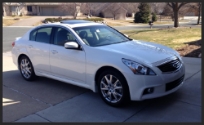

I am guilty of running my car in the morning for like 15-20mins.... but thats because when its -10 degrees out, i want to get into a warm car, not a -10 degree car.

Registered User
Joined: Dec 2008
Posts: 64
Likes: 0
Shell premium gas has no ethanol. Ethanol is bad in every imaginable way (bad for your car, bad for your mileage, bad for power, bad for the environment, and bad for global food supplies).
I get slightly better mileage with Shell gas than with any other brand. Most premium gas here has only 5% ethanol while regular has 10% - 15%, though these numbers all change with local laws. Sunoco has 94 octane, but I see no reason to use it because it will not result in better mileage and it has 5% ethanol.
FYI, this is in Ontario. Local laws will alter the ethanol numbers for you.
I get slightly better mileage with Shell gas than with any other brand. Most premium gas here has only 5% ethanol while regular has 10% - 15%, though these numbers all change with local laws. Sunoco has 94 octane, but I see no reason to use it because it will not result in better mileage and it has 5% ethanol.
FYI, this is in Ontario. Local laws will alter the ethanol numbers for you.
Registered User
Joined: Oct 2008
Posts: 486
Likes: 9
The really great problem with these lengthy warm-ups is that if you're not in the car and something goes wrong (e.g., a chain of events wherein the engine overheats due to a blocked radiator core and the sensors don't pick it up in time, et.), you're not there to stop the damage. Sorta like leaving a baby unattended in the living room while you go out for a 10 minute smoke.

Registered User
Joined: Oct 2008
Posts: 486
Likes: 9
Yep... a 10-15 minute warm-up can easily consume 3X more gas than driving the car after a 15-30 second warm-up. With a full tank of gas and 20 lengthy warm-ups (at 10 minutes apiece), this could translate into a loss of >1 gallon (or a drop of 2-5mpg) of gas, depending on how efficient your car runs- not to mention that wasted carbon footprint!
