


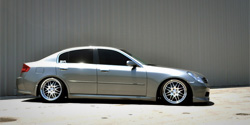
*******my g35x getting less then 300km on a full tank!!!********

yea i have pop charger z tube coupe middy and i drive interstate all the time and city a little bit and sometime if im lucky i get around 400 miles a tank thats driving normal ...


the way you drive can kill the tank of gas that you use...
i dont really rev my engine past 3.5k rpm. and dont sudden accelerate.
before... when i first got my setup.. i was burning gas fast because i loved the sound of my car and jsut revved and also quick accelerations to hear my intake suck air..
but thats jsut me
i dont really rev my engine past 3.5k rpm. and dont sudden accelerate.
before... when i first got my setup.. i was burning gas fast because i loved the sound of my car and jsut revved and also quick accelerations to hear my intake suck air..
but thats jsut me


Don't think it really matters. Just go to AutoZone and pick one up. To tell you the truth, as long as you are using top tier gasoline they should have decent detergents in them already. The fuel filter may be something you want to have looked at though.
To be honest, i'm very disappointed there is no user-servicable filter on the G35...at least an EASILY servicable filter.
The filter is in the tank. I hear it can be accessed by pulling the rear seat out, but it has no change interval.
In my experience with other cars, every 30K miles i pull out the old filter and replace it...and they flush the old one and crud ALWAYS comes out.
Kinda wonder what the tank filter will really look like at 100K miles
The filter is in the tank. I hear it can be accessed by pulling the rear seat out, but it has no change interval.
In my experience with other cars, every 30K miles i pull out the old filter and replace it...and they flush the old one and crud ALWAYS comes out.
Kinda wonder what the tank filter will really look like at 100K miles

Registered User
Joined: Feb 2010
Posts: 94
Likes: 0
From: Lethbridge, Alberta, Canada
300kms to a tank is pretty bad, I average 450kms ( 300 miles ) to a tank, You get 190 miles per tank!!! thats pretty bad something must be wrong, You will lose 1mpg maybe 2 from the wheels.

I get roughly 380-400 miles to a full tank
I did 380 and it was really low, light was on and everything.
All highway, there are two stop lights on my way to work.
Consistently get 300 miles and I have 1/4 of a tank left.
sometimes 320.......
I did 380 and it was really low, light was on and everything.
All highway, there are two stop lights on my way to work.
Consistently get 300 miles and I have 1/4 of a tank left.
sometimes 320.......

You can rule out a major tune up, injectors, etc. because these cars are smart. ANY mechanical problem that is going to lead to excessive fuel consumption and/or emissions is going to be caught by the ECU and trip a service light.
Things that can be causing poor mileage:
1) A tank that is not filling up all the way. This can be a somewhat common problem with these cars. Right when your fuel light comes on, usually means you have 3 to 4 gallons left in the 20 gallon tank. If the light is on and you're only putting in 15 or less gallons, the fuel cut-off unit is going flakey.
2) You're not calculating MPGs the right way. In order to calculate MPGs, you need to zero out trip odometer, fill the tank, record the gallons that went in, fill back up, and divide the mileage gone by the gallons put in.
3) Driving style. If you do a lot of sub 5 mile driving and the car is parked outside, you're going to have a lot cold starts and prolonged warmups. Short trips results don't allow the motor to warm up and achieve optimal efficency. Cold engines, winter gas, cold temps, stop and go driving, and excessive throttle use will all impact MPG greatly.
4) Wheels. Those 20 inch wheels are heavier and wider, have significantly more weight further from the hub which increase rotational inertia, and the tires are heavier/wider. This has a HUGE impact on MPGs. The wheels alone could be sucking out 10% mpgs. No joke. The huge wheels also increase braking distance, degrade ride quality, and make handling worse. That's a big price to pay for a "look".
5) You drive an X. The X weighs 180lbs more than the RWD varient, has an extra differential, a transfer case, and 3 extra axles/driveshafts. The extra weight and driveline loss will equate to a significant drop in MPGs. On average, the X will see about 10-15% lower MPGs than the RWDs. Under normal driving, in warmer temps, and with OEM 17" wheels, an X owner should expect 15-17 in pure city driving and 21-23mpg in pure highway driving. That would equate to a range of 255 to 390 miles on a typical 17 gallon fillup.
6) Get rid of the K&N filter. Nissan MAF sensors are highly sensitive and K&N filters will put minute amounts of filter oil on the MAF elements. This can basically make the MAF think the ambient temps are colder than they really are which leads to the MAF telling the ECU to make the engine run rich. Running rich impacts MPGs negatively. Throw the K&N away, yank the MAF and clean it with electonics cleaner, and buy an OEM or NAPA Gold paper filter and replace annually.
Things that can be causing poor mileage:
1) A tank that is not filling up all the way. This can be a somewhat common problem with these cars. Right when your fuel light comes on, usually means you have 3 to 4 gallons left in the 20 gallon tank. If the light is on and you're only putting in 15 or less gallons, the fuel cut-off unit is going flakey.
2) You're not calculating MPGs the right way. In order to calculate MPGs, you need to zero out trip odometer, fill the tank, record the gallons that went in, fill back up, and divide the mileage gone by the gallons put in.
3) Driving style. If you do a lot of sub 5 mile driving and the car is parked outside, you're going to have a lot cold starts and prolonged warmups. Short trips results don't allow the motor to warm up and achieve optimal efficency. Cold engines, winter gas, cold temps, stop and go driving, and excessive throttle use will all impact MPG greatly.
4) Wheels. Those 20 inch wheels are heavier and wider, have significantly more weight further from the hub which increase rotational inertia, and the tires are heavier/wider. This has a HUGE impact on MPGs. The wheels alone could be sucking out 10% mpgs. No joke. The huge wheels also increase braking distance, degrade ride quality, and make handling worse. That's a big price to pay for a "look".
5) You drive an X. The X weighs 180lbs more than the RWD varient, has an extra differential, a transfer case, and 3 extra axles/driveshafts. The extra weight and driveline loss will equate to a significant drop in MPGs. On average, the X will see about 10-15% lower MPGs than the RWDs. Under normal driving, in warmer temps, and with OEM 17" wheels, an X owner should expect 15-17 in pure city driving and 21-23mpg in pure highway driving. That would equate to a range of 255 to 390 miles on a typical 17 gallon fillup.
6) Get rid of the K&N filter. Nissan MAF sensors are highly sensitive and K&N filters will put minute amounts of filter oil on the MAF elements. This can basically make the MAF think the ambient temps are colder than they really are which leads to the MAF telling the ECU to make the engine run rich. Running rich impacts MPGs negatively. Throw the K&N away, yank the MAF and clean it with electonics cleaner, and buy an OEM or NAPA Gold paper filter and replace annually.

Thread Starter
|
Registered User
Joined: Apr 2008
Posts: 113
Likes: 1
You can rule out a major tune up, injectors, etc. because these cars are smart. ANY mechanical problem that is going to lead to excessive fuel consumption and/or emissions is going to be caught by the ECU and trip a service light.
Things that can be causing poor mileage:
1) A tank that is not filling up all the way. This can be a somewhat common problem with these cars. Right when your fuel light comes on, usually means you have 3 to 4 gallons left in the 20 gallon tank. If the light is on and you're only putting in 15 or less gallons, the fuel cut-off unit is going flakey.
2) You're not calculating MPGs the right way. In order to calculate MPGs, you need to zero out trip odometer, fill the tank, record the gallons that went in, fill back up, and divide the mileage gone by the gallons put in.
3) Driving style. If you do a lot of sub 5 mile driving and the car is parked outside, you're going to have a lot cold starts and prolonged warmups. Short trips results don't allow the motor to warm up and achieve optimal efficency. Cold engines, winter gas, cold temps, stop and go driving, and excessive throttle use will all impact MPG greatly.
4) Wheels. Those 20 inch wheels are heavier and wider, have significantly more weight further from the hub which increase rotational inertia, and the tires are heavier/wider. This has a HUGE impact on MPGs. The wheels alone could be sucking out 10% mpgs. No joke. The huge wheels also increase braking distance, degrade ride quality, and make handling worse. That's a big price to pay for a "look".
5) You drive an X. The X weighs 180lbs more than the RWD varient, has an extra differential, a transfer case, and 3 extra axles/driveshafts. The extra weight and driveline loss will equate to a significant drop in MPGs. On average, the X will see about 10-15% lower MPGs than the RWDs. Under normal driving, in warmer temps, and with OEM 17" wheels, an X owner should expect 15-17 in pure city driving and 21-23mpg in pure highway driving. That would equate to a range of 255 to 390 miles on a typical 17 gallon fillup.
6) Get rid of the K&N filter. Nissan MAF sensors are highly sensitive and K&N filters will put minute amounts of filter oil on the MAF elements. This can basically make the MAF think the ambient temps are colder than they really are which leads to the MAF telling the ECU to make the engine run rich. Running rich impacts MPGs negatively. Throw the K&N away, yank the MAF and clean it with electonics cleaner, and buy an OEM or NAPA Gold paper filter and replace annually.
Things that can be causing poor mileage:
1) A tank that is not filling up all the way. This can be a somewhat common problem with these cars. Right when your fuel light comes on, usually means you have 3 to 4 gallons left in the 20 gallon tank. If the light is on and you're only putting in 15 or less gallons, the fuel cut-off unit is going flakey.
2) You're not calculating MPGs the right way. In order to calculate MPGs, you need to zero out trip odometer, fill the tank, record the gallons that went in, fill back up, and divide the mileage gone by the gallons put in.
3) Driving style. If you do a lot of sub 5 mile driving and the car is parked outside, you're going to have a lot cold starts and prolonged warmups. Short trips results don't allow the motor to warm up and achieve optimal efficency. Cold engines, winter gas, cold temps, stop and go driving, and excessive throttle use will all impact MPG greatly.
4) Wheels. Those 20 inch wheels are heavier and wider, have significantly more weight further from the hub which increase rotational inertia, and the tires are heavier/wider. This has a HUGE impact on MPGs. The wheels alone could be sucking out 10% mpgs. No joke. The huge wheels also increase braking distance, degrade ride quality, and make handling worse. That's a big price to pay for a "look".
5) You drive an X. The X weighs 180lbs more than the RWD varient, has an extra differential, a transfer case, and 3 extra axles/driveshafts. The extra weight and driveline loss will equate to a significant drop in MPGs. On average, the X will see about 10-15% lower MPGs than the RWDs. Under normal driving, in warmer temps, and with OEM 17" wheels, an X owner should expect 15-17 in pure city driving and 21-23mpg in pure highway driving. That would equate to a range of 255 to 390 miles on a typical 17 gallon fillup.
6) Get rid of the K&N filter. Nissan MAF sensors are highly sensitive and K&N filters will put minute amounts of filter oil on the MAF elements. This can basically make the MAF think the ambient temps are colder than they really are which leads to the MAF telling the ECU to make the engine run rich. Running rich impacts MPGs negatively. Throw the K&N away, yank the MAF and clean it with electonics cleaner, and buy an OEM or NAPA Gold paper filter and replace annually.
Hey man thanks for the help. really nice info! i will take that in consideration for sure and do exactly what you told me to do.

i get about 275-300 on a tank. no mods lowered and 19" thats all but i had my stock rims on for winter and still the same. i much as i like my car, i am never buying a infiniti, the have bad resale value and this car sucks on gas, should have been a v8 then. im just gonna buy a beater and a project car after i sell this, but the g still picks up the bitches i say.


I wanted to test out this method of calculating gas mileage as I was curious how my car would do (completely stock 03.5 6MT  ). Unfortunately, I don't drive my car that much (it is mostly used when I have to run errands) so it took me a while to get through the better part of a tank of gas. Anyway, here are my results after resetting my trip odometer at my prior fill...
Distance travelled: 316.5 km (196.7 miles)
Fuel added: 40.127 L (18.55 gallons)
Fuel Mileage: 12.7 L/100km (18.6 mpg)
Most of my driving is short little trips so I thought that wasn't too bad. Thanks for the tip on calculating gas mileage.
). Unfortunately, I don't drive my car that much (it is mostly used when I have to run errands) so it took me a while to get through the better part of a tank of gas. Anyway, here are my results after resetting my trip odometer at my prior fill...Distance travelled: 316.5 km (196.7 miles)
Fuel added: 40.127 L (18.55 gallons)
Fuel Mileage: 12.7 L/100km (18.6 mpg)
Most of my driving is short little trips so I thought that wasn't too bad. Thanks for the tip on calculating gas mileage.