


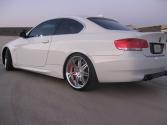
Some pics of my 8000ks installed


Registered User
Joined: Oct 2004
Posts: 1,148
Likes: 0
From: Hoboken,NJ
Originally Posted by skeleton_cru
He said "sourced from China". Just because the box says Made in Japan doesn't mean all the parts inside are.
I took the time to visit the HIDynamic website and dug up some good laughs. Here is a chart of light output based on bulb color temp they have up on their site:

So according to them 12,000K bulbs have the same output as 4300K.

Also, 90% of their image galleries have no output shots. They only have shots of headlights from the front. However, there are a couple of beam pattern shots like this:

Holy glare batman.
Registered User
Joined: Oct 2004
Posts: 1,148
Likes: 0
From: Hoboken,NJ
Originally Posted by IS300TOG35
Have a nice day Mr. my lights are better than your lights.
Originally Posted by IS300TOG35
Driving with them for 2 nights I love the color. Whoever says you lose light with 8000k has bad eyes becuase I prefer this color light lighting up the road in front of me.

Registered User
iTrader: (15)
Joined: Aug 2003
Posts: 1,846
Likes: 9
From: Toh-rensa,Ahteesia,Ahcadia,Montree Pak, Longa Beacha
Pete, that chart from them is just flat out false advertising. Anyone who is serious about HIDs and retrofits knows that 4100K is 3200 lumens in D2S. Even D2Rs are 2800.
Again, from the Hidfaq:
The main difference is the U-shaped masking on the D2R that blocks out unpredictable light in certain directions. Also, the base has different notches. Name of base is P32-d2 for D2S and P32-d3 for D2R. D2R was developed so that Mercedes could still use their reflector based headlights in the mid 1990s. They did not want use projectors like BMW. A glare box inside the headlight could have been used to accomplish a straight line, but a mask painted on the bulb was cheaper to make and had better precision. Other (near) luxury cars (Lexus, Infinity and Acura) followed Mercedes and equipped their cars with D2R bulbs in reflector based headlamps. Using a D2R in anything else than a OEM HID headlight designed for the D2R bulb makes no sense. It will only reduce output. Some HID kits comes with D2R bulbs. Some amateur kit designers will even claim that D2R genrally reduces glare in a retrofit. This is nonsense. The D2R bulb masking is around 3-4 a'clock and 8-9 o'clock when bulb is in right position. Those are not the (only) sectors that creates glare.
As an example, here is the data on Philips 2 versions:
D2S: 3200lm, 4250K, 91lm/W, 35W
D2R: 2800lm, 4150K, 80lm/W, 35W
Anyway, IS300TOG35, I'm not here to knock the 8000K bulbs. I wouldn't care which kit you go with. But to say that you don't lose light with 8000K bulbs compared to the equivalent 4100K is wrong.
I had 8000K Vestecs after my first retrofit. Your eyes focus on the blue more, and the blue reflects more glare off of road signs. It gives the illusion that there is more light because your eyes focus on it more. But unless someone here can actually measure the brightness in lumens and give objective data, rather than "it seems brighter," then we'll have to go with the data from Philips that I've posted earlier.
I'm also in the process of replacing my fogs/highs with HIDs. I was 80% done, but I've decided to not go with Audi RS6 bixenons anymore, and instead to go with a Stanley Bixenon.
Again, from the Hidfaq:
The main difference is the U-shaped masking on the D2R that blocks out unpredictable light in certain directions. Also, the base has different notches. Name of base is P32-d2 for D2S and P32-d3 for D2R. D2R was developed so that Mercedes could still use their reflector based headlights in the mid 1990s. They did not want use projectors like BMW. A glare box inside the headlight could have been used to accomplish a straight line, but a mask painted on the bulb was cheaper to make and had better precision. Other (near) luxury cars (Lexus, Infinity and Acura) followed Mercedes and equipped their cars with D2R bulbs in reflector based headlamps. Using a D2R in anything else than a OEM HID headlight designed for the D2R bulb makes no sense. It will only reduce output. Some HID kits comes with D2R bulbs. Some amateur kit designers will even claim that D2R genrally reduces glare in a retrofit. This is nonsense. The D2R bulb masking is around 3-4 a'clock and 8-9 o'clock when bulb is in right position. Those are not the (only) sectors that creates glare.
As an example, here is the data on Philips 2 versions:
D2S: 3200lm, 4250K, 91lm/W, 35W
D2R: 2800lm, 4150K, 80lm/W, 35W
Anyway, IS300TOG35, I'm not here to knock the 8000K bulbs. I wouldn't care which kit you go with. But to say that you don't lose light with 8000K bulbs compared to the equivalent 4100K is wrong.
I had 8000K Vestecs after my first retrofit. Your eyes focus on the blue more, and the blue reflects more glare off of road signs. It gives the illusion that there is more light because your eyes focus on it more. But unless someone here can actually measure the brightness in lumens and give objective data, rather than "it seems brighter," then we'll have to go with the data from Philips that I've posted earlier.
I'm also in the process of replacing my fogs/highs with HIDs. I was 80% done, but I've decided to not go with Audi RS6 bixenons anymore, and instead to go with a Stanley Bixenon.


Originally Posted by E_K
I had 8000K Vestecs after my first retrofit. Your eyes focus on the blue more, and the blue reflects more glare off of road signs. It gives the illusion that there is more light because your eyes focus on it more.
Registered User
iTrader: (15)
Joined: Aug 2003
Posts: 1,846
Likes: 9
From: Toh-rensa,Ahteesia,Ahcadia,Montree Pak, Longa Beacha
Originally Posted by IS300TOG35
so what is wrong with them if I can still see? Illusion or not I can see just fine with my lights at night. end of story.
Originally Posted by E_K
I never said you don't see with them. I said that 8000K does lose light output compared to 4100K, as backed by manufacturer data.

Matt, it's cool that you like it and all. The only downside with the blue is when you are driving in the rain, you're going to be focusing on the blue rain now heh.
Other than that, they do look kinda cool. I would go 6k if my bulbs blew, had em before my 2 other cars. But not the type into changing bulbs and such, it's like messing with neons =/
<-- Not into the whole clear corner/light bulb thing.
Other than that, they do look kinda cool. I would go 6k if my bulbs blew, had em before my 2 other cars. But not the type into changing bulbs and such, it's like messing with neons =/
<-- Not into the whole clear corner/light bulb thing.
Originally Posted by Down_Shift
Matt, it's cool that you like it and all. The only downside with the blue is when you are driving in the rain, you're going to be focusing on the blue rain now heh.


Okay, been doing some research of my own.
5000k are the best for the brightest light producing 3400 lumens.
6000k are the best for more of a cool white but only drop down to 3200 (still more than our factory 4100k.
http://www.xenonexpert.com/technical.html
HID Technology:
XENON HID lamps do not have a filament. Instead the light is created by an electrical discharge between two electrodes in an air tight tiny quartz capsule filled with xenon gas, mercury and metal halide salts. This improves durability as road vibrations can cause damage to coil lighting technologies. These light sources also produce a blue-white light that is safer because it is closer to natural daylight. The color temperature is approximately 5000 K compared to 2300 K for halogen. The increased light output from a 35 watt XENON HID lamp is approximately 200% more light then a 55 watt halogen bulb. The XENON HID system will also draw less power from your vehicles electrical system.
Temperature:
Color Temperature is a measurement in Degrees Kelvin that indicates the hue of a specific type of light source. Many people believe the misconception that color temperature is a rating of the brightness of the bulb or HID kit. This belief is completely false. The reality of the matter is that the higher the color temperature, the less useable light output you will obtain. However, it is also a fact that, all HID light is brighter than Halogen, even if it is a 12000 Kelvin, the Lumen still maintain well over 2500lm; which is still 2x brighter than 55W Halogen.
Temperature = Color and Lumens = brightness
Even though some halogen bulbs are coated with blue to get that temperature color you are looking for (ex:6000k), there's a big downside to that. The blue glass actually robs lumens and the bulb's performance is affected. So you end up having a bulb that reaches the promised color but gives you even less road coverage than your standard clear halogen bulb. If you want the white/blue colors and great performance, only HID will be able to give you both.
Safety:
It can be vital to see even more in borderline situations. Because unfortunately, the risk of having an accident at night is about twice as high as during the day - despite the fact that there is less traffic on the road. The reason: humans are only inadequately equipped to see at night or in poor weather conditions. The better you can see and the more similar the light conditions are to daylight, the better the compensation for the factors that make night driving difficult:
* Overstimulation caused by the large number of traffic signs.
* Reduction of visual acuity at night to one twentieth of the daytime level.
* Loss of important information due to restricted field of vision, considerably reduced ability to recognise contrasts and colours.
* Tiredness and decreasing concentration.
* Diminishing powers of vision in the dark from 30 years of age onwards
Xenon globes offer more light than conventional Halogen globesand that in a quality similar to daylight, ensuring more safety. Road illumination is brighter and wider with Xenon light. In particular, dangers at the curb areas as well as obstacles in front of the vehicle are recognised more quickly. Pedestrians or cyclists can also be seen better, as can traffic signs at the edge of the road. In poor weather conditions - such as rain, fog or snow - drivers gain better spatial vision. This means that the orientation ability of drivers is less limited despite adverse conditions. Driving comfort is also improved. A road that is illuminated more brightly and widely by Xenon Light reduces the amount of concentration needed, so that drivers do not become tired as quickly and can concentrate on driving for longer.


5000K = Great light output (3400 lumens),Pure white, excellent performance
6000K = Good light output (3200 lumens) , White with a hint of blue, best looks, very good performance
Okay guys, enough argueing, obviously 5k is the best, but 6k is the best for a better look without loosing hardly any light like E K says.
6000k are the best for more of a cool white but only drop down to 3200 (still more than our factory 4100k.
http://www.xenonexpert.com/technical.html
HID Technology:
XENON HID lamps do not have a filament. Instead the light is created by an electrical discharge between two electrodes in an air tight tiny quartz capsule filled with xenon gas, mercury and metal halide salts. This improves durability as road vibrations can cause damage to coil lighting technologies. These light sources also produce a blue-white light that is safer because it is closer to natural daylight. The color temperature is approximately 5000 K compared to 2300 K for halogen. The increased light output from a 35 watt XENON HID lamp is approximately 200% more light then a 55 watt halogen bulb. The XENON HID system will also draw less power from your vehicles electrical system.
Temperature:
Color Temperature is a measurement in Degrees Kelvin that indicates the hue of a specific type of light source. Many people believe the misconception that color temperature is a rating of the brightness of the bulb or HID kit. This belief is completely false. The reality of the matter is that the higher the color temperature, the less useable light output you will obtain. However, it is also a fact that, all HID light is brighter than Halogen, even if it is a 12000 Kelvin, the Lumen still maintain well over 2500lm; which is still 2x brighter than 55W Halogen.
Temperature = Color and Lumens = brightness
Even though some halogen bulbs are coated with blue to get that temperature color you are looking for (ex:6000k), there's a big downside to that. The blue glass actually robs lumens and the bulb's performance is affected. So you end up having a bulb that reaches the promised color but gives you even less road coverage than your standard clear halogen bulb. If you want the white/blue colors and great performance, only HID will be able to give you both.
Safety:
It can be vital to see even more in borderline situations. Because unfortunately, the risk of having an accident at night is about twice as high as during the day - despite the fact that there is less traffic on the road. The reason: humans are only inadequately equipped to see at night or in poor weather conditions. The better you can see and the more similar the light conditions are to daylight, the better the compensation for the factors that make night driving difficult:
* Overstimulation caused by the large number of traffic signs.
* Reduction of visual acuity at night to one twentieth of the daytime level.
* Loss of important information due to restricted field of vision, considerably reduced ability to recognise contrasts and colours.
* Tiredness and decreasing concentration.
* Diminishing powers of vision in the dark from 30 years of age onwards
Xenon globes offer more light than conventional Halogen globesand that in a quality similar to daylight, ensuring more safety. Road illumination is brighter and wider with Xenon light. In particular, dangers at the curb areas as well as obstacles in front of the vehicle are recognised more quickly. Pedestrians or cyclists can also be seen better, as can traffic signs at the edge of the road. In poor weather conditions - such as rain, fog or snow - drivers gain better spatial vision. This means that the orientation ability of drivers is less limited despite adverse conditions. Driving comfort is also improved. A road that is illuminated more brightly and widely by Xenon Light reduces the amount of concentration needed, so that drivers do not become tired as quickly and can concentrate on driving for longer.
5000K = Great light output (3400 lumens),Pure white, excellent performance
6000K = Good light output (3200 lumens) , White with a hint of blue, best looks, very good performance
Okay guys, enough argueing, obviously 5k is the best, but 6k is the best for a better look without loosing hardly any light like E K says.


alright ive had it with all the website info ive been reading. I went out and drove around and took some REAL pics of MY car and how the lights look at night time... when it comes down to it, its your eyes that should judge not science.
(pics taken with no flash)


turned on dome light for this one

(pics taken with no flash)
turned on dome light for this one