When you click on links to various merchants on this site and make a purchase, this can result in this site earning a commission. Affiliate programs and affiliations include, but are not limited to, the eBay Partner Network.
Im still with the 70mm Celestron
" Didn't want to completely brake the bank which is easy to do with telescopes" Is what I truly fear however seeing Jupiter from a 70 can quite a tease, I was able to catch a glimpse, just very low definition.
Picked up a used Moto G6 in mint condition for under $70, there's not a scratch on it. It's a lot of phone for the money, I've never seen the wisdom of spending up to $1000 or more on one. Baller on a budget you might say lol.
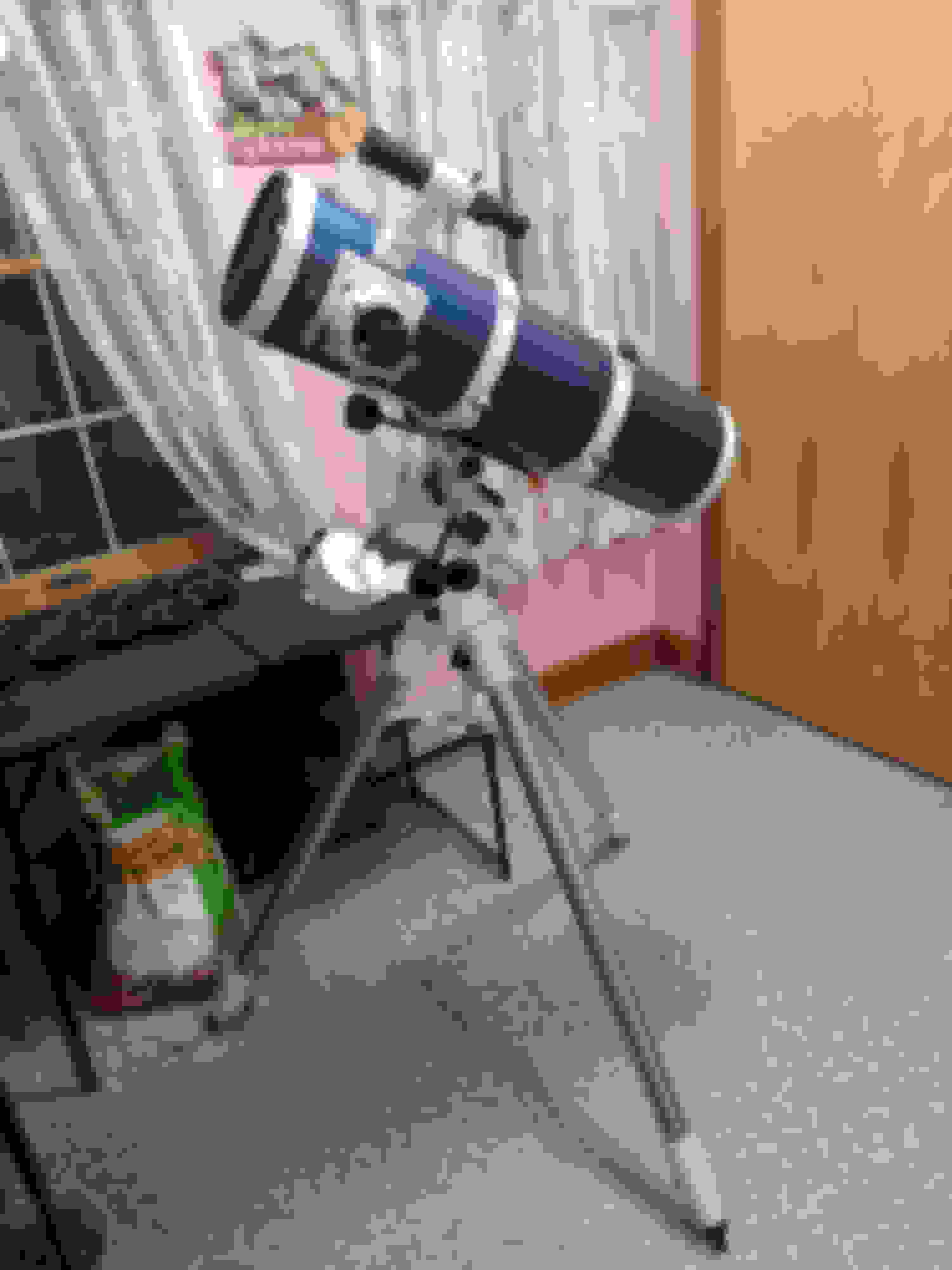
Got a new scope, Celestron Omni 150 xlt on a CG-4 eq mount. Didn't get to look at anything because it's pouring rain outside right now >.< so I collimated the lenses.
Upgraded from a 4.5" dobsonian, didn't want to completely brake the bank which is easy to do with telescopes. This thing should be pretty good bang for your buck though.
Already have a bunch of Televue plossel eyepieces that I used on the dob so I was able to put a little more money into the optical tube and mount.
Hopefully these clouds clear up in the early morning because I want to go use thing thing right now lol.
Any thoughts on the SpaceX starlink internet project? People think it will ruin the night sky having so many satellites. Either way, the launches are fun to watch
Any thoughts on the SpaceX starlink internet project? People think it will ruin the night sky having so many satellites. Either way, the launches are fun to watch
They've started to take it more seriously, but for now (and the next few launches), the satellites will be coated as-is from what I've read. In the meantime, they'll try tuning the direction of the solar panels relative to the earth so they're less visible... we'll have to wait & see what happens.
It's only a problem for long exposure astrophotography. They move FAST across the sky, sort of like the ISS. If you aren't taking long exposure pictures it makes absolutely zero difference.
Most amateur astrophotography is less than 30 second exposures or less so they won't be affected at all, intermediate level photography would be your 1-5 minute exposures and they might be affected, it's best to check a website that tracks things like the starlink.
Long long exposure stuff, like those big meter scopes, professional BIG scopes in big funded observatories... those guys are the ones who are being affected and they're being REALLY affected, it's only going to get worse. They take minimum exposures of like 60 minutes all the way up to dusk-dawn exposures that are 8 hours long.
The longer the shutter is open the more light that is gathered, the better the picture. That's all astrological observation is, watching light emitted from the far ends of the cosmos, when a gigantic reflective chunk of metal shoots across your picture it sort of ruins things.
There are currently so many satellites in orbit it's almost impossible to go a night without seeing a few if you're on a lower power eyepiece. I like to pop the clutches on the scope and follow them by hand when I see one