


Necessary Upgrades (Please give me your input)


The reason I recommended sways/endlinks is because he still wants a comfortable ride and cut down on body lean, sways will do most of that. Coilovers/Springs will not give him a OE ride and will require a complete camber kit. (done right!) I suggested the sways as a beginning because that may be all he needs for his sedan to have fun. A set of Michelin Pilot Super Sports will give him more grip playing in the twisties....Gary

^ Totally agree. It's hard to advise people when thing such as comfort and handling are so subjective. Some think their slammed, stretched tires stance setup are comfortable, others find even slightly old oem struts uncomfortable so it's hard to know what people's comfort zones are. So when someone asks for comfort setup, if their budget allows it, I generally try to suggest them some good quality coils like Kw's with dampening so they have a higher chance of being happy with the comfort. I'd hate to advise someone to get the coils and then have it way too rough for their liking.
But I totally agree that v1's/Eibach's are great coils for the price even without dampening adjustability. Heck, if I didn't want to try out the fortune auto coils that I just got, I would have gone with either Eibach/v1 or kw V2's.
But I totally agree that v1's/Eibach's are great coils for the price even without dampening adjustability. Heck, if I didn't want to try out the fortune auto coils that I just got, I would have gone with either Eibach/v1 or kw V2's.
Bit of a thread jack but, lemme know how things turn out bud!

I believe the number was 0.8" lower than stock was the oem limit?
Or you only needed rear camber arms. I forget :P
Either way, I think its really difficult to advise OP without him laying out his needs, price point, common driving habit etc and since he has done little for the conversation on this thread.
I think we should just leave it at this.
/thread.
Or you only needed rear camber arms. I forget :P
Either way, I think its really difficult to advise OP without him laying out his needs, price point, common driving habit etc and since he has done little for the conversation on this thread.
I think we should just leave it at this.
/thread.



Weight transfer is basically a function of center of gravity height and wheel base. Decreasing weight transfer is good, because tires are non-linear in terms of normal-force to traction (why decreasing weight is good). Minimizing lateral weight transfer is good because it increase your total available traction for cornering. That is the main benefit in lowering your car, and one of the benefits in getting wider wheels.
Anti-sway bars mostly control peak roll angles, which decreases the time to get to peak roll. They also change the balance of weight shift (ie they can decrease the weight shift at one axle by increasing it at the other). There is some theoretical minus to them because you start tying your wheels together instead of having a truly independent suspension, but I've seen a lot of people (like caroll smith), claim that practically this doesn't come into play much. Though with stiff sway bars you do get decreased droop travel, and can get in-lift if you planned your suspension poorly, or ride over a bumper/zeb
True, if I had the money and wanted to build my car to handle like a race car, I would tear everything out and build a race car. But for practicality's sake, if you want to mod your street car to handle, the three must have mods are still tires, struts, and sway bars for the reasons I posted above.

Registered User
Joined: Jul 2005
Posts: 415
Likes: 58
I never argued that decreasing weight transfer is a bad thing. Decreasing weight transfer is good, but I argue that completely eliminating it is a very bad thing. Same with roll. It all must have a bit of balance based on what mods you add.
http://www.rowleyrace.com/PDF/Chapter_14_Excerpt.pdf
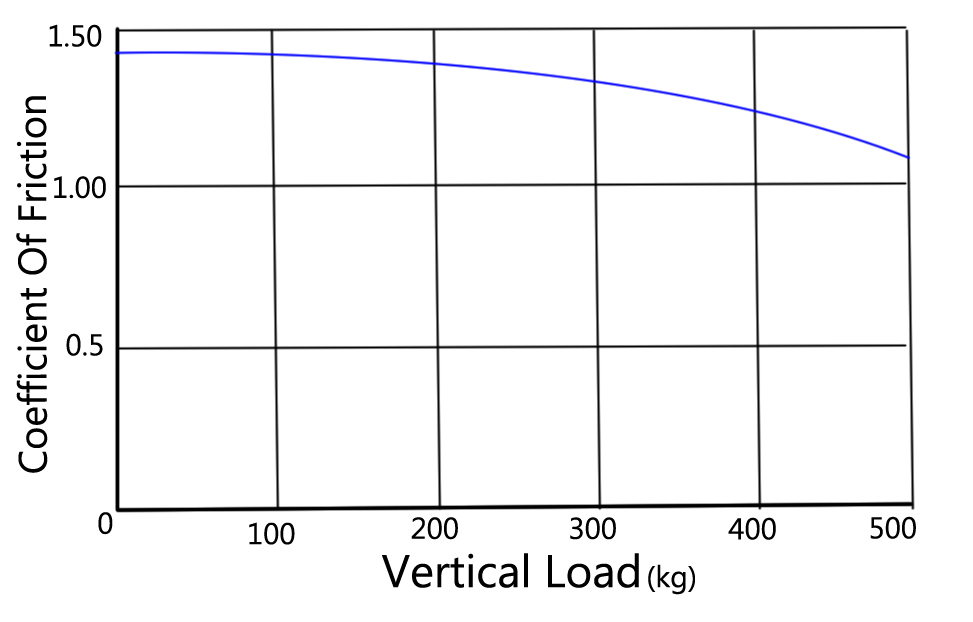
If it were possible design a car with 0 weight transfer, it would be miraculously fast, and designers would love to do that, but it is impossible. Why you don't want to over-lower your car is more that the benefit of the reduced weight transfer is less than the tons of negatives from your suspension. The thing is though, that decreasing weight shift is actually super important and has huge effects, and so you might actually gain performance in a mild drop, even if you do nothing else and everything else is crap. It is hard to say where the crossover point is, where the negatives outweigh the benefits, but it's probably not a very large drop.
The issue of roll is quite more complicated. It is more an issue of tire deformation and camber control through suspension and driver preference.
When you start talking about the front-rear balance and think about the car as 4 wheels instead of 2, then you have to add in vertical load transfers on top of the lateral load transfer. So when you enter a corner, you transfer weight to the front, then to the outside, then to the rear in combinations. so you can't really "apply weight evenly." When you stiffen one ant-roll bar instead of the other, what you are doing is moving weight transfer around. Say for example you have total 500lbs of weight transfer, split evenly between front and rear at 250/250. Putting a stiffer rear anti-roll bar would move the split so that it would be something like 200/300. But even 250/250 split is not necessarily good, for a variety of reasons, and I don't know what the actual numbers look like for the g. Even at steady state 250/250 isn't ideal because the front and rear tires see different slip angles, so you might benefit in having more diagonal weight transfer to the front outside, unless you are ayrton senna and can yaw your rear tires with the gas.
If you want looks, then just drop your G with springs or coilovers. Springs do not do much for handling, if anything they just stiffen your suspension making it feel like you have bigger sway bars while you are destroying your struts and shocks - the one part that is actually keeping those tires to the ground.
It's just that it is better to tune your shocks instead, since spring rates affect the tire's roadholding ability. The actual effect springs have though, are kind of eluding me at the moment. It's actually why I started doing a lot of the reading (trying to figure out what's the "best" spring rate), and I am no closer to than when I started. I think it's because I haven't gone through a tire textbook yet.
Some argue that it lowers your center of gravity, but it actually shifts your center of gravity in a negative way. It also prevents a lot of sway, which while we want to eliminate most of it, we need a little sway for better handling (as you go into a turn, the outside tire needs to travel a further distance than the inside tire in the same amount of time, so the outside tire needs more traction which it gets with weight being shifted to that side)
And again, no you don't want to load up the outside tire. The rotational speed of the tire actually doesn't have that much effect on the lateral thrust generated. So like above, you want minimal weight transfer, and again like above, roll has minimal effect on weight transfer (the only effect is that when you roll, your center of gravity shifts like some mm downwards, motoIQ claims it's like 1-1.5% of the total load transfer). Because the outside tire is inevitably loaded though, you can do things like play with the suspension geometry and toe and all that jazz.
The fact that the outside wheel moves more then the inside wheel has more of an effect when you start talking about the ackerman angle. http://www.super7thheaven.co.uk/Ackermann_Geometry
PS: our cars don't have struts, they have shocks.
Last edited by totopo; May 10, 2013 at 01:20 AM.


Because tires have a non-linear traction relationship (see graph), when you have weight transfer, YOU ALWAYS DECREASE the total available traction. The tires are always supporting the total weight of the car. So when you add X amount of weight to the outside tire, you lose it from the inside tire.
While feeling more G's through a turn sounds like a good thing, it doesn't really make your car any faster through turns since feeling more Gs and your car actually putting down more Gs are completely different. Your outside wheels need to travel further than the inside tires in the same amount of time - that is the reason why the outside tires should have more traction in these instances, but the weight be balanced for the straights. Think about it, what benefit is there to having the same amount of traction on the inside tires in a turn if the outside tires need to travel further in the same amount of time? Because we do not have unlimited resources, we first need to make use of what we already have, so why not transfer the weight to get through the turns faster?
There is a reason why they've engineered street cars with so much roll and weight transfer, and like I said, if you are building a track car, you'd want to think things differently. But we are talking street cars - something with only a few bolt-ons that will be using for daily driving. Something that needs to be practical that we want to perform a little better.
You are posting a lot of great info, but the problem with it is applying it in real life, on a budget with the crap parts that we have available to us.
Last edited by dofu; May 11, 2013 at 09:41 PM.
Registered User
Joined: Jul 2005
Posts: 415
Likes: 58
Honestly, I get tired time hours writing and sourcing large posts in order to try to teach people who type out some random crap without looking up info on their own, so I will make this brief and won't source.
No, stock cars can out-handle a lot of show cars because it's usually because people who modify their show cars get crap quality springs with crap spring rates on crap dampers. Then they over-lower their car without having springs stiff enough and end up with a roll center like a foot below ground, a huge roll couple, terrible damping rates, and springs that basically bottom out every bump.
But are you telling me that you think the stock suspension is perfect for track use and can't be improved upon? You can easily make the g35 a better track car. Lower the car slightly, get good springs, get good dampers valved to match your springs, and get roll center adjusters and bring the roll center back to stock.
Stock cars have so many other considerations and sacrifices for drive-ability, like comfort and the ability to carry cargo.
Please do some reading, this is just plain wrong. Your tires are tied together to the car through the chassis. When you load up the outside tire, you unload the inside tire by the same amount, and because the tire normal force curve is less than 1:1, you end up with less useable lateral traction.
Think about it this way: Stiff anti-roll bars INCREASE weight shift on that axle. This is verify-able by load cells on the tires. (Because the total weight shift has to happen anyway, so if you constrain one axle, with a stiffer anti-roll bar, that sees more of the transfer than the other axle). And you are hopefully aware of the general guidelines in tuning balance through anti-roll bars. If you want more oversteer, stiff rear, weaker fronts, and vice versa. Because more weight shift decreases traction, and that end brakes earlier. Stiffer roll bar -> more weight transfer on that axle-> less traction
Again, total weight shift happens at the tire level. It gets more complicated when you start talking about geometric and elastic weight transfer, but those are more concerned with the roll angle and the behavior of the suspension geometry. But they all end up adding up to the same formula at the tire level. And again, weight shift is bad.
It doesn't matter that the outside tire rotates more. That's a non-sequitor. The slip angles might be different, but that is a feature of your ackerman degree. Pneumatic tires generate side forces by their slip angle.
I'm not entirely an expert, so I'm not great at explaining things. Please stop using "common sense" and stop assuming random presuppositions. If you don't believe what I am saying, go look up the answers for yourself and post references.
That is exactly the point. For the most part, I'm not gonna argue with any of those concepts except for the fact that they aren't practical for us. That roll and weight transfer is exactly what you want from a street car. Why is it that you can mod the hell out of your suspension but your car won't go through the turns as quickly? How is it that a less modified car can out-handle a car with coilovers, etc...? Because with the more aggressive set-up, you've almost completely eliminated roll and weight transfer from the inside wheels to the outside wheels.
But are you telling me that you think the stock suspension is perfect for track use and can't be improved upon? You can easily make the g35 a better track car. Lower the car slightly, get good springs, get good dampers valved to match your springs, and get roll center adjusters and bring the roll center back to stock.
Stock cars have so many other considerations and sacrifices for drive-ability, like comfort and the ability to carry cargo.
While feeling more G's through a turn sounds like a good thing, it doesn't really make your car any faster through turns since feeling more Gs and your car actually putting down more Gs are completely different. Your outside wheels need to travel further than the inside tires in the same amount of time - that is the reason why the outside tires should have more traction in these instances, but the weight be balanced for the straights. Think about it, what benefit is there to having the same amount of traction on the inside tires in a turn if the outside tires need to travel further in the same amount of time? Because we do not have unlimited resources, we first need to make use of what we already have, so why not transfer the weight to get through the turns faster?
There is a reason why they've engineered street cars with so much roll and weight transfer, and like I said, if you are building a track car, you'd want to think things differently. But we are talking street cars - something with only a few bolt-ons that will be using for daily driving. Something that needs to be practical that we want to perform a little better.
You are posting a lot of great info, but the problem with it is applying it in real life, on a budget with the crap parts that we have available to us.
There is a reason why they've engineered street cars with so much roll and weight transfer, and like I said, if you are building a track car, you'd want to think things differently. But we are talking street cars - something with only a few bolt-ons that will be using for daily driving. Something that needs to be practical that we want to perform a little better.
You are posting a lot of great info, but the problem with it is applying it in real life, on a budget with the crap parts that we have available to us.
Think about it this way: Stiff anti-roll bars INCREASE weight shift on that axle. This is verify-able by load cells on the tires. (Because the total weight shift has to happen anyway, so if you constrain one axle, with a stiffer anti-roll bar, that sees more of the transfer than the other axle). And you are hopefully aware of the general guidelines in tuning balance through anti-roll bars. If you want more oversteer, stiff rear, weaker fronts, and vice versa. Because more weight shift decreases traction, and that end brakes earlier. Stiffer roll bar -> more weight transfer on that axle-> less traction
Again, total weight shift happens at the tire level. It gets more complicated when you start talking about geometric and elastic weight transfer, but those are more concerned with the roll angle and the behavior of the suspension geometry. But they all end up adding up to the same formula at the tire level. And again, weight shift is bad.
It doesn't matter that the outside tire rotates more. That's a non-sequitor. The slip angles might be different, but that is a feature of your ackerman degree. Pneumatic tires generate side forces by their slip angle.
I'm not entirely an expert, so I'm not great at explaining things. Please stop using "common sense" and stop assuming random presuppositions. If you don't believe what I am saying, go look up the answers for yourself and post references.
Honestly, I get tired time hours writing and sourcing large posts in order to try to teach people who type out some random crap without looking up info on their own, so I will make this brief and won't source.
No, stock cars can out-handle a lot of show cars because it's usually because people who modify their show cars get crap quality springs with crap spring rates on crap dampers. Then they over-lower their car without having springs stiff enough and end up with a roll center like a foot below ground, a huge roll couple, terrible damping rates, and springs that basically bottom out every bump.
But are you telling me that you think the stock suspension is perfect for track use and can't be improved upon? You can easily make the g35 a better track car. Lower the car slightly, get good springs, get good dampers valved to match your springs, and get roll center adjusters and bring the roll center back to stock.
Stock cars have so many other considerations and sacrifices for drive-ability, like comfort and the ability to carry cargo.
Please do some reading, this is just plain wrong. Your tires are tied together to the car through the chassis. When you load up the outside tire, you unload the inside tire by the same amount, and because the tire normal force curve is less than 1:1, you end up with less useable lateral traction.
Think about it this way: Stiff anti-roll bars INCREASE weight shift on that axle. This is verify-able by load cells on the tires. (Because the total weight shift has to happen anyway, so if you constrain one axle, with a stiffer anti-roll bar, that sees more of the transfer than the other axle). And you are hopefully aware of the general guidelines in tuning balance through anti-roll bars. If you want more oversteer, stiff rear, weaker fronts, and vice versa. Because more weight shift decreases traction, and that end brakes earlier. Stiffer roll bar -> more weight transfer on that axle-> less traction
Again, total weight shift happens at the tire level. It gets more complicated when you start talking about geometric and elastic weight transfer, but those are more concerned with the roll angle and the behavior of the suspension geometry. But they all end up adding up to the same formula at the tire level. And again, weight shift is bad.
It doesn't matter that the outside tire rotates more. That's a non-sequitor. The slip angles might be different, but that is a feature of your ackerman degree. Pneumatic tires generate side forces by their slip angle.
I'm not entirely an expert, so I'm not great at explaining things. Please stop using "common sense" and stop assuming random presuppositions. If you don't believe what I am saying, go look up the answers for yourself and post references.
No, stock cars can out-handle a lot of show cars because it's usually because people who modify their show cars get crap quality springs with crap spring rates on crap dampers. Then they over-lower their car without having springs stiff enough and end up with a roll center like a foot below ground, a huge roll couple, terrible damping rates, and springs that basically bottom out every bump.
But are you telling me that you think the stock suspension is perfect for track use and can't be improved upon? You can easily make the g35 a better track car. Lower the car slightly, get good springs, get good dampers valved to match your springs, and get roll center adjusters and bring the roll center back to stock.
Stock cars have so many other considerations and sacrifices for drive-ability, like comfort and the ability to carry cargo.
Please do some reading, this is just plain wrong. Your tires are tied together to the car through the chassis. When you load up the outside tire, you unload the inside tire by the same amount, and because the tire normal force curve is less than 1:1, you end up with less useable lateral traction.
Think about it this way: Stiff anti-roll bars INCREASE weight shift on that axle. This is verify-able by load cells on the tires. (Because the total weight shift has to happen anyway, so if you constrain one axle, with a stiffer anti-roll bar, that sees more of the transfer than the other axle). And you are hopefully aware of the general guidelines in tuning balance through anti-roll bars. If you want more oversteer, stiff rear, weaker fronts, and vice versa. Because more weight shift decreases traction, and that end brakes earlier. Stiffer roll bar -> more weight transfer on that axle-> less traction
Again, total weight shift happens at the tire level. It gets more complicated when you start talking about geometric and elastic weight transfer, but those are more concerned with the roll angle and the behavior of the suspension geometry. But they all end up adding up to the same formula at the tire level. And again, weight shift is bad.
It doesn't matter that the outside tire rotates more. That's a non-sequitor. The slip angles might be different, but that is a feature of your ackerman degree. Pneumatic tires generate side forces by their slip angle.
I'm not entirely an expert, so I'm not great at explaining things. Please stop using "common sense" and stop assuming random presuppositions. If you don't believe what I am saying, go look up the answers for yourself and post references.
Last edited by dofu; May 14, 2013 at 12:04 AM.
Registered User
Joined: Jul 2005
Posts: 415
Likes: 58
So you've given us a lot of info. Apply it to someone with $1000 to spend on their G, looking to get the very most out of that money. Let's pretend this guy already has very good tires, so the rest can be spent on suspension. Make it practical enough to where it can be repeated over and over again with different cars with similar results, so that means custom suspensions are out of the equation.
Faster lap times on a road course: buy 7 track days with your $1000 (I believe top gear or 5th gear actually did a segment proving this to be the most cost effective)
Faster lap times on autox: 12 or however many solo2 sessions that will buy you.
Also consider gt5 or iracing or some other realistic driving simulator thrown in-between
For tuning your car, I'm not sure what's the best value for your dollar.
For handling, I would say probably follow the grassroots motorsports guide:
http://grassrootsmotorsports.com/articles/dialed-in/
Be careful though, as that is geared more towards autocross, so some of the suggestions and times don't completely carry over. One is the tire inflation pressure, especially since tires heat up on the track and the pressures can go up. And also because you aren't concerned with transition response as much as maximal traction on road courses.
Another way to play with tire pressures is as suggested by farnorth racing: to download's a track app like harry's lap timer (iphone) or trackmaster (droid) and find an empty parking lot. Inflate your tires to close to the max, cone out a skid pad in the parking lot, and measure your max lateral grip. Let the tires cool, deflate a few psi, repeat. The g's should go up, then down, max is your ideal tire pressure, subtract a little from that to let your tires heat up.
Alignment is good, especially since you can increase your negative rear camber for free, though it will make the car harder to rotate. If you have a front camber plate already, probably follow motoiq's recs and go for like -1.5-2.5 in the front and -0-1.5 in the rear depending on how much you track and how much you want to wear your tires (if you track, increasing camber actually evens out your tire wear).
Also, tightening the seat-belt is pretty helpful, especially on sweeping left handers. Move the seat backwards a little, suck in your gut and pull the seatbelt as tight as you can, jerk it to fix the ratchet, move the chair back to driving position. Pseudo harness. Also, consider the cg lock if it keeps coming loose mid-session.
I think anti-roll bars are probably effective for their price, especially for novice drivers. There is a lot of controversy about sways at the track. Some people really hate on them. They at least will make your car feel tighter on roads, which is what OP was looking for, even if they don't really make your car turn faster. Increasing the front and the rear sway by the same percentage to maintain the oem balance is probably prudent for a novice driver.
I think the g35 might actually be faster on lightweight 17 wheels rather than 18's or 19's, if you can fit it around your brakes. Like an enkei rpf1 in 17x9 or something, and run some 265 width r-s3's or something on it. keep your scrub radius the same. Running wider tires also increases your wheelbase, which decreases weight transfer, which is good.
You can't really effectively do much with your springs/shocks with $1000. If you forgo sways, you can almost afford some koni yellows + springs. I don't know what spring rates you'd want to run though, and if you have no shock dyno and you are a novice driver, you won't know what to do with all those *****.
If you wanted to be temporarily cheap, just swift springs might be feasible on stock shocks (since they are so close in spring rates), but I would never carry any sort of cargo with those springs. It would probably also completely murder your oem shocks so would cost you money in the long run. It might work better if you went with a lightweight wheel with the swift springs to boost the wheel rate.
Depends on your goals.
Faster lap times on a road course: buy 7 track days with your $1000 (I believe top gear or 5th gear actually did a segment proving this to be the most cost effective)
Faster lap times on autox: 12 or however many solo2 sessions that will buy you.
Also consider gt5 or iracing or some other realistic driving simulator thrown in-between
For tuning your car, I'm not sure what's the best value for your dollar.
For handling, I would say probably follow the grassroots motorsports guide:
http://grassrootsmotorsports.com/articles/dialed-in/
Be careful though, as that is geared more towards autocross, so some of the suggestions and times don't completely carry over. One is the tire inflation pressure, especially since tires heat up on the track and the pressures can go up. And also because you aren't concerned with transition response as much as maximal traction on road courses.
Another way to play with tire pressures is as suggested by farnorth racing: to download's a track app like harry's lap timer (iphone) or trackmaster (droid) and find an empty parking lot. Inflate your tires to close to the max, cone out a skid pad in the parking lot, and measure your max lateral grip. Let the tires cool, deflate a few psi, repeat. The g's should go up, then down, max is your ideal tire pressure, subtract a little from that to let your tires heat up.
Alignment is good, especially since you can increase your negative rear camber for free, though it will make the car harder to rotate. If you have a front camber plate already, probably follow motoiq's recs and go for like -1.5-2.5 in the front and -0-1.5 in the rear depending on how much you track and how much you want to wear your tires (if you track, increasing camber actually evens out your tire wear).
Also, tightening the seat-belt is pretty helpful, especially on sweeping left handers. Move the seat backwards a little, suck in your gut and pull the seatbelt as tight as you can, jerk it to fix the ratchet, move the chair back to driving position. Pseudo harness. Also, consider the cg lock if it keeps coming loose mid-session.
I think anti-roll bars are probably effective for their price, especially for novice drivers. There is a lot of controversy about sways at the track. Some people really hate on them. They at least will make your car feel tighter on roads, which is what OP was looking for, even if they don't really make your car turn faster. Increasing the front and the rear sway by the same percentage to maintain the oem balance is probably prudent for a novice driver.
I think the g35 might actually be faster on lightweight 17 wheels rather than 18's or 19's, if you can fit it around your brakes. Like an enkei rpf1 in 17x9 or something, and run some 265 width r-s3's or something on it. keep your scrub radius the same. Running wider tires also increases your wheelbase, which decreases weight transfer, which is good.
You can't really effectively do much with your springs/shocks with $1000. If you forgo sways, you can almost afford some koni yellows + springs. I don't know what spring rates you'd want to run though, and if you have no shock dyno and you are a novice driver, you won't know what to do with all those *****.
If you wanted to be temporarily cheap, just swift springs might be feasible on stock shocks (since they are so close in spring rates), but I would never carry any sort of cargo with those springs. It would probably also completely murder your oem shocks so would cost you money in the long run. It might work better if you went with a lightweight wheel with the swift springs to boost the wheel rate.
Faster lap times on a road course: buy 7 track days with your $1000 (I believe top gear or 5th gear actually did a segment proving this to be the most cost effective)
Faster lap times on autox: 12 or however many solo2 sessions that will buy you.
Also consider gt5 or iracing or some other realistic driving simulator thrown in-between
For tuning your car, I'm not sure what's the best value for your dollar.
For handling, I would say probably follow the grassroots motorsports guide:
http://grassrootsmotorsports.com/articles/dialed-in/
Be careful though, as that is geared more towards autocross, so some of the suggestions and times don't completely carry over. One is the tire inflation pressure, especially since tires heat up on the track and the pressures can go up. And also because you aren't concerned with transition response as much as maximal traction on road courses.
Another way to play with tire pressures is as suggested by farnorth racing: to download's a track app like harry's lap timer (iphone) or trackmaster (droid) and find an empty parking lot. Inflate your tires to close to the max, cone out a skid pad in the parking lot, and measure your max lateral grip. Let the tires cool, deflate a few psi, repeat. The g's should go up, then down, max is your ideal tire pressure, subtract a little from that to let your tires heat up.
Alignment is good, especially since you can increase your negative rear camber for free, though it will make the car harder to rotate. If you have a front camber plate already, probably follow motoiq's recs and go for like -1.5-2.5 in the front and -0-1.5 in the rear depending on how much you track and how much you want to wear your tires (if you track, increasing camber actually evens out your tire wear).
Also, tightening the seat-belt is pretty helpful, especially on sweeping left handers. Move the seat backwards a little, suck in your gut and pull the seatbelt as tight as you can, jerk it to fix the ratchet, move the chair back to driving position. Pseudo harness. Also, consider the cg lock if it keeps coming loose mid-session.
I think anti-roll bars are probably effective for their price, especially for novice drivers. There is a lot of controversy about sways at the track. Some people really hate on them. They at least will make your car feel tighter on roads, which is what OP was looking for, even if they don't really make your car turn faster. Increasing the front and the rear sway by the same percentage to maintain the oem balance is probably prudent for a novice driver.
I think the g35 might actually be faster on lightweight 17 wheels rather than 18's or 19's, if you can fit it around your brakes. Like an enkei rpf1 in 17x9 or something, and run some 265 width r-s3's or something on it. keep your scrub radius the same. Running wider tires also increases your wheelbase, which decreases weight transfer, which is good.
You can't really effectively do much with your springs/shocks with $1000. If you forgo sways, you can almost afford some koni yellows + springs. I don't know what spring rates you'd want to run though, and if you have no shock dyno and you are a novice driver, you won't know what to do with all those *****.
If you wanted to be temporarily cheap, just swift springs might be feasible on stock shocks (since they are so close in spring rates), but I would never carry any sort of cargo with those springs. It would probably also completely murder your oem shocks so would cost you money in the long run. It might work better if you went with a lightweight wheel with the swift springs to boost the wheel rate.
You can do a lot with $1000 if you are doing the installs yourself. Some good struts, (maybe used Z springs with rear camber and toe bolts) and sway bars. For another $1000, I would tighten the chassis with tie bars, lat bar, cross brace, etc... then maybe strut bars if I just have money to throw around. IMHO, besides tires, the struts are the single most important part to upgrade if you want more traction, period. True, stock struts aren't horrible to begin with (although I felt they were pretty bad), but then you might as well just tell someone to keep their car stock and not even think about making any improvements on anything.
IMHO, the problem with the way you suggest tuning the car that makes it impractical is how you look at sway bars. So far, I've tested every theory for myself on both FWD and RWD cars, and I can tell you with certainty that sway bars are important as hell as they prevent oversteer or understeer, depending on how you tune them. The problem with your thinking is that you are not taking into account the different kinds of turns and speeds someone will be driving. If your car puts a lot of power down to the rear wheels, then sway bars are definitely great to have, especially if the driver has a heavy foot and likes to have fun.
Not having the right balance with your sway bars can leave your car understeering through tight turns and possibly oversteering through the long windy turns. What matters about which sway bar is more important is whether you have FWD or RWD. FWD tend to understeer, so the only important sway bar for them is the rear since the larger rear sway bar will help increase grip up front. RWD tend to oversteer, so the important sway bar is the front, which will also add grip to the rear wheels. Some people do take off a sway bar which is fine if you are comfortable with how your car will handle when you push your car hard enough to lose traction. The only valid argument about sway bars is whether they are too stiff as FWDs have to deal with throttle-off oversteer, and performance can ultimately be compromised if the sway bars are just too stiff.
The point of the sway bars are to take the load off of the inside tire to put more load on the outside tire, like you really want so you can get your car to rotate. I would never recommend anyone removing any of their sway bars unless they know exactly what they are doing. You can argue all you want, but unless your car is an F1 car, you are not going to be able to throttle through a turn as much if you have even amounts of traction on all four wheels, which means your car will not be capable of getting through that turn faster.
As for the dials on the struts... it's relatively simple, dialing in the suspension by feel will already give you an improvement over stock. And while they are great for Hondas and other cars, I wouldn't suggest Konis for the G.
Last edited by dofu; May 15, 2013 at 05:53 AM.

Actually, dofu, Koni yellows are known as fantastic shocks, which is generally why they are double the price of Tokicos, etc. They are rebound adjustable and are also rebuildable, which is a big plus. The reason you don't see many of them on street G's likely has more to do with cost and lack of knowledge about damping settings and tuning, not lack of performance, because they are very high quality shocks.
Actually, dofu, Koni yellows are known as fantastic shocks, which is generally why they are double the price of Tokicos, etc. They are rebound adjustable and are also rebuildable, which is a big plus. The reason you don't see many of them on street G's likely has more to do with cost and lack of knowledge about damping settings and tuning, not lack of performance, because they are very high quality shocks.

I personally will never lower my car again if it's a DD.
I think the term "upgrade" is subjective being that you may "upgrade" the handling and "downgrade" your ride quality. If you have sport pkg from stock, it honestly handles fine.
In my opinion, a DD should be kept at OEM height for function over form.
If it's a weekend toy, that's a different story!
I think the term "upgrade" is subjective being that you may "upgrade" the handling and "downgrade" your ride quality. If you have sport pkg from stock, it honestly handles fine.
In my opinion, a DD should be kept at OEM height for function over form.
If it's a weekend toy, that's a different story!
Then put em on your G and tell me how you like em. Price has never been an issue with this crowd especially since people here spend much more on crap parts for their Gs... there is a reason why not many go with Konis. I never said they were bad, in fact, I said they are great, just not for the G.
On what are you basing the opinion that Konis are not great for the G? Have you actually run them on your G? Jeff92se has them on his and loves them.
Last edited by G35fromPA; May 15, 2013 at 08:08 PM.