


Whats the best way to wash my G35?


Here is the Detailed Image way of washing to minimize adding imperfections in the paint... (most is found on our site but I'm going to be adding some more information)
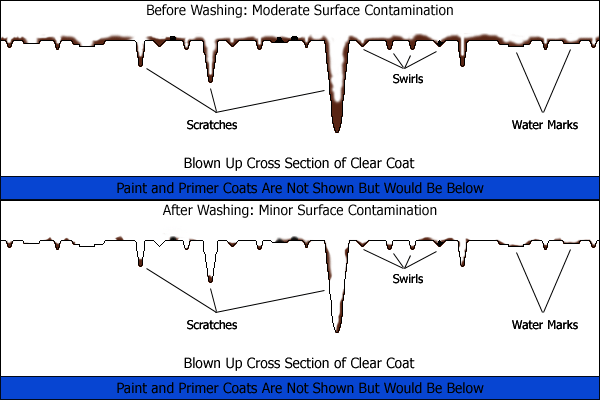
Washing and Drying can be the most overlooked step during a detail, however, in reality is one of the most important steps. You may be asking yourself how washing and drying can be so important. The reason is because many of the imperfections in your paint (scratches, swirl marks, water spots, etc.) are caused due to improper washing and drying techniques. Our goal is to teach you how to effectively remove contamination while minimizing the possibility of creating more imperfections in your paint.
The above diagram displays a cross section of your clear coat and what happens as you wash and dry your paint. The picture will change every 5 seconds to show the before and after effects of washing and drying. Notice how you go from moderate contamination to minor surface contamination. Keep in mind this may not always be visible contamination. Your paint may not be perfectly clean and prepped for the next step with just washing.
Recommended Products:
• (2x) Quality Wash Mitts
• (1x) A good lubricating automotive shampoo
• (1-2x) Quality Drying Towels
• (2x) 5 Gallon Wash Buckets
• (1-2x) Grit Guard Inserts for the Buckets
• (1x) Water Supply and Hose
• (1x) Bug and Tar Degreaser
Why do I need these products you may ask? Start with two wash mitts. Is one good enough? We strongly encourage using two wash mitts for many reasons. The main reason is your lower panels, front and rear bumpers, wheels and wheel wells get significantly dirtier than the rest of your vehicle and you do not want to be using the same mitt that just removed large particles of tar to touch your hood and side panels. Allocating one wash mitt just for those heavily contaminated areas is a smart move because you will not be using a contaminated wash mitt on your delicate paint. Using one mitt throughout is one major reason why people create swirls during the wash phase. Another reason we suggest using two wash mitts is that if you use one wash mitt for the entire vehicle, the life span of the mitt will be that much shorter due to heavy build up in one mitt. A heavily contaminated mitt requires you to purchase mitts more frequently and creates more risk to your paint. By allocating two wash mitts to your vehicle, you can choose one, preferably a Sheepskin Wash Mitt, for the parts of your vehicle that do not get extremely contaminated (from the knees up) and a second one, perhaps a more durable Microfiber Wash Mitt, for the areas of that see the most contamination (from the knees down).
A good lubricating shampoo is crucial when trying to safely remove contamination. Without proper lubrication you would be pushing dirt, pollen, tar, etc. across your paint and causing many imperfections in your clear coat. Properly lubricated shampoos will help lift contamination from the surface, creating a slick surface for easy contamination removal. A quality shampoo should also have the proper conditioners for your paint unlike dish soap. Dish soap, such as Dawn, will remove previous layers of wax to start with a fresh surface, however there are downsides to washing with dish soap over time. Dish soap can dry out your paint, dry out and discolor plastic, vinyl and rubber trim. There are better methods to strip the previous layers of sealant or wax that are beneficial to your paints surface, such as chemical polishes, abrasive polishes and clay barring your paint. Shampoos with conditioners work well because they can clean your freshly sealed or waxed vehicle without removing this protection.
Investing in high quality drying towels will not only save you time during the drying process while minimizing the possibility of adding swirls. Our towel of choice is a Microfiber Waffle Weave Drying Towel. This design has a small nap to pull contamination away from the surface as well as hold large amounts of water in its pockets. In some cases, you will only need one of these 25” x 32” towels to dry your entire vehicle assuming you follow our helpful tips and techniques (which will be explained in just a moment) during the drying process, but two is always great. It is the safest product we have tested to minimize the possibility of adding swirls to your clear coat. Its also essential that your drying towel stay as clean as possible because dragging a dirty towel across the paint can add swirls and very fine scratches. Make sure you don’t dry area that were not cleaned during the washing process like door jambs.
Two (~5 gallon) wash buckets is a must for any wash day. The reasoning will be described in further detail as we get into the how-to part of the tutorial, but one will be filled with water and suds and the second one with just water. We also recommend adding Grit Guard Inserts to your buckets to help keep the contaminated water on the bottom and also help release contamination from your wash mitt as you dunk your mitt into the bucket.
Water supply and hose is pretty obvious but should not be over looked. Flooding the surface of your vehicle is the best thing for minimizing the chance of adding imperfections to your paint so plenty of water will be necessary for pre-wash, rinse and final sheet drying.
Bug and tar degreaser is a nice product to have around when you happen to run into stubborn bits of contamination that need to be pre-treated prior to the wash. The most common things this will be used on is tar, bug splatter and rail dust, but works on far more. Usually this product will be used on the lower panels, behind wheels, and the front and rear bumpers.
How To:
Let us start by addressing some proper procedures to follow prior to actually washing the vehicle. First, find an area to work in with plenty of shade. With the sun beating on hot soapy water, it can cause water etching and spots on your vehicles paint. This will add more time in your routine removing them especially if you are just washing and drying for maintenance and not planning on doing a full routine. The paint and wheels should be cool to the touch prior to washing. Next step, take a look at your attire, no jeans, no belts, no buttons, no rivets, no zippers, and no jewelry or other potentially hazardous objects. You may ask why, but the reasoning is pretty simple, they all will easily scratch your paints surface even with very minimal pressure. Also at this time ensure that all windows are completely up and doors, hood and trunk are completely closed and remove license plates or other easily removable items from the vehicle.
Prep Stage:
1. Insert your Grit Guards into the wash buckets
2. Fill up one 5 gallon wash bucket about 3/4 full of water and the remaining 1/4 full of suds.
3. Fill up the second 5 gallon wash bucket about 1/2 full of water.
Washing:
1. Rinse down an area of the vehicle that you plan on washing. Start from the top of the vehicle and work your way down. Also, work in sections such as front fenders and hood, or passenger side and half of the roof.
2. Walk around your vehicle and pre-treat any areas that have a lot of contamination, such as bug splatter, tar, and other road grime that may be difficult to remove, with a bug and tar degreaser.
3. Allow degreaser to sit on the contaminated surface for a few minutes (see manufacturers suggestion)
4. Dunk your wash mitt dedicated for heavily contaminated areas in the bucket of suds.
5. Gently glide your wash mitt across the areas that were treated with degreaser and heavily contaminated areas, such as, lower panels, front bumper and rear bumper.
6. Return to the second wash bucket without suds and shake out your wash mitt in the clean water to remove loose contamination in the pile of the mitt. Then place the mitt back into the bucket of suds to continue washing.
7. Rinse off of each panel of the vehicle as it is completed.
8. Continue washing and rinsing the vehicle in the same fashion for all panels that are heavily contaminated.
9. Empty the two buckets (or at least the rinse bucket) and refill them per instructions in the prep stage listed above.
10. Dunk your second wash mitt into the suds, which should be your cleanest wash mitt, and gently glide your wash mitt across the rest of the vehicle starting top down. Work in a logical pattern and rinse the vehicle every couple of panels.
11. Return to the second wash bucket without suds and shake out your wash mitt in the clean water to remove loose contamination in the pile of the mitt. Then place the mitt back into the bucket of suds to continue washing.
12. Rinse off of each panel of the vehicle as it is completed.
13. Once the entire vehicle has been washed and rinsed, remove the spray nozzle from the hose. Starting from the top of the vehicle sheet free flowing water from the hose off of the vehicle. You should begin to notice less water accumulation on the surface compared to just rinsing off the vehicle. When working down the sides of the vehicle, move the hose from left to right while getting lower and lower, this will ensure the water floods off of the vehicle and will cut your drying time down considerably.
Washing and Drying can be the most overlooked step during a detail, however, in reality is one of the most important steps. You may be asking yourself how washing and drying can be so important. The reason is because many of the imperfections in your paint (scratches, swirl marks, water spots, etc.) are caused due to improper washing and drying techniques. Our goal is to teach you how to effectively remove contamination while minimizing the possibility of creating more imperfections in your paint.
The above diagram displays a cross section of your clear coat and what happens as you wash and dry your paint. The picture will change every 5 seconds to show the before and after effects of washing and drying. Notice how you go from moderate contamination to minor surface contamination. Keep in mind this may not always be visible contamination. Your paint may not be perfectly clean and prepped for the next step with just washing.
Recommended Products:
• (2x) Quality Wash Mitts
• (1x) A good lubricating automotive shampoo
• (1-2x) Quality Drying Towels
• (2x) 5 Gallon Wash Buckets
• (1-2x) Grit Guard Inserts for the Buckets
• (1x) Water Supply and Hose
• (1x) Bug and Tar Degreaser
Why do I need these products you may ask? Start with two wash mitts. Is one good enough? We strongly encourage using two wash mitts for many reasons. The main reason is your lower panels, front and rear bumpers, wheels and wheel wells get significantly dirtier than the rest of your vehicle and you do not want to be using the same mitt that just removed large particles of tar to touch your hood and side panels. Allocating one wash mitt just for those heavily contaminated areas is a smart move because you will not be using a contaminated wash mitt on your delicate paint. Using one mitt throughout is one major reason why people create swirls during the wash phase. Another reason we suggest using two wash mitts is that if you use one wash mitt for the entire vehicle, the life span of the mitt will be that much shorter due to heavy build up in one mitt. A heavily contaminated mitt requires you to purchase mitts more frequently and creates more risk to your paint. By allocating two wash mitts to your vehicle, you can choose one, preferably a Sheepskin Wash Mitt, for the parts of your vehicle that do not get extremely contaminated (from the knees up) and a second one, perhaps a more durable Microfiber Wash Mitt, for the areas of that see the most contamination (from the knees down).
A good lubricating shampoo is crucial when trying to safely remove contamination. Without proper lubrication you would be pushing dirt, pollen, tar, etc. across your paint and causing many imperfections in your clear coat. Properly lubricated shampoos will help lift contamination from the surface, creating a slick surface for easy contamination removal. A quality shampoo should also have the proper conditioners for your paint unlike dish soap. Dish soap, such as Dawn, will remove previous layers of wax to start with a fresh surface, however there are downsides to washing with dish soap over time. Dish soap can dry out your paint, dry out and discolor plastic, vinyl and rubber trim. There are better methods to strip the previous layers of sealant or wax that are beneficial to your paints surface, such as chemical polishes, abrasive polishes and clay barring your paint. Shampoos with conditioners work well because they can clean your freshly sealed or waxed vehicle without removing this protection.
Investing in high quality drying towels will not only save you time during the drying process while minimizing the possibility of adding swirls. Our towel of choice is a Microfiber Waffle Weave Drying Towel. This design has a small nap to pull contamination away from the surface as well as hold large amounts of water in its pockets. In some cases, you will only need one of these 25” x 32” towels to dry your entire vehicle assuming you follow our helpful tips and techniques (which will be explained in just a moment) during the drying process, but two is always great. It is the safest product we have tested to minimize the possibility of adding swirls to your clear coat. Its also essential that your drying towel stay as clean as possible because dragging a dirty towel across the paint can add swirls and very fine scratches. Make sure you don’t dry area that were not cleaned during the washing process like door jambs.
Two (~5 gallon) wash buckets is a must for any wash day. The reasoning will be described in further detail as we get into the how-to part of the tutorial, but one will be filled with water and suds and the second one with just water. We also recommend adding Grit Guard Inserts to your buckets to help keep the contaminated water on the bottom and also help release contamination from your wash mitt as you dunk your mitt into the bucket.
Water supply and hose is pretty obvious but should not be over looked. Flooding the surface of your vehicle is the best thing for minimizing the chance of adding imperfections to your paint so plenty of water will be necessary for pre-wash, rinse and final sheet drying.
Bug and tar degreaser is a nice product to have around when you happen to run into stubborn bits of contamination that need to be pre-treated prior to the wash. The most common things this will be used on is tar, bug splatter and rail dust, but works on far more. Usually this product will be used on the lower panels, behind wheels, and the front and rear bumpers.
How To:
Let us start by addressing some proper procedures to follow prior to actually washing the vehicle. First, find an area to work in with plenty of shade. With the sun beating on hot soapy water, it can cause water etching and spots on your vehicles paint. This will add more time in your routine removing them especially if you are just washing and drying for maintenance and not planning on doing a full routine. The paint and wheels should be cool to the touch prior to washing. Next step, take a look at your attire, no jeans, no belts, no buttons, no rivets, no zippers, and no jewelry or other potentially hazardous objects. You may ask why, but the reasoning is pretty simple, they all will easily scratch your paints surface even with very minimal pressure. Also at this time ensure that all windows are completely up and doors, hood and trunk are completely closed and remove license plates or other easily removable items from the vehicle.
Prep Stage:
1. Insert your Grit Guards into the wash buckets
2. Fill up one 5 gallon wash bucket about 3/4 full of water and the remaining 1/4 full of suds.
3. Fill up the second 5 gallon wash bucket about 1/2 full of water.
Washing:
1. Rinse down an area of the vehicle that you plan on washing. Start from the top of the vehicle and work your way down. Also, work in sections such as front fenders and hood, or passenger side and half of the roof.
2. Walk around your vehicle and pre-treat any areas that have a lot of contamination, such as bug splatter, tar, and other road grime that may be difficult to remove, with a bug and tar degreaser.
3. Allow degreaser to sit on the contaminated surface for a few minutes (see manufacturers suggestion)
4. Dunk your wash mitt dedicated for heavily contaminated areas in the bucket of suds.
5. Gently glide your wash mitt across the areas that were treated with degreaser and heavily contaminated areas, such as, lower panels, front bumper and rear bumper.
6. Return to the second wash bucket without suds and shake out your wash mitt in the clean water to remove loose contamination in the pile of the mitt. Then place the mitt back into the bucket of suds to continue washing.
7. Rinse off of each panel of the vehicle as it is completed.
8. Continue washing and rinsing the vehicle in the same fashion for all panels that are heavily contaminated.
9. Empty the two buckets (or at least the rinse bucket) and refill them per instructions in the prep stage listed above.
10. Dunk your second wash mitt into the suds, which should be your cleanest wash mitt, and gently glide your wash mitt across the rest of the vehicle starting top down. Work in a logical pattern and rinse the vehicle every couple of panels.
11. Return to the second wash bucket without suds and shake out your wash mitt in the clean water to remove loose contamination in the pile of the mitt. Then place the mitt back into the bucket of suds to continue washing.
12. Rinse off of each panel of the vehicle as it is completed.
13. Once the entire vehicle has been washed and rinsed, remove the spray nozzle from the hose. Starting from the top of the vehicle sheet free flowing water from the hose off of the vehicle. You should begin to notice less water accumulation on the surface compared to just rinsing off the vehicle. When working down the sides of the vehicle, move the hose from left to right while getting lower and lower, this will ensure the water floods off of the vehicle and will cut your drying time down considerably.
Drying:
1. After the vehicle has been sheeted off using the technique described above, take out your drying towels.
2. Blot-dry any large pools of water with your drying towel. This will help get the towel damp which can increase its ability to absorb.
3. Continue around the vehicle lightly wiping off any remaining water on your vehicle.
4. If you plan on using a blower or air compressor to blow out any seams and cracks this would be the time to do it.
5. Give the vehicle a final wipe down to ensure there is no water left on the vehicle.
Next Step:
The next logical step in the complete detailing process is to use a clay bar on your vehicle. Washing and drying is the foundation of any detail so you may proceed to any step next.
This is a pretty complete washing routine and also one of the safest ones you could make. Below I will list some suggested washing and drying tools to use to get the most out of your detail:
Sheepskin Wash Mitt
Microfiber Wash Mitt
Microfiber Waffle Weave Drying Towels
Grit Guard Inserts
Quality Automotive Shampoo
Bug and Tar Degreaser
If anyone has any questions, let me know!
George @ Detailed Image
1. After the vehicle has been sheeted off using the technique described above, take out your drying towels.
2. Blot-dry any large pools of water with your drying towel. This will help get the towel damp which can increase its ability to absorb.
3. Continue around the vehicle lightly wiping off any remaining water on your vehicle.
4. If you plan on using a blower or air compressor to blow out any seams and cracks this would be the time to do it.
5. Give the vehicle a final wipe down to ensure there is no water left on the vehicle.
Next Step:
The next logical step in the complete detailing process is to use a clay bar on your vehicle. Washing and drying is the foundation of any detail so you may proceed to any step next.
This is a pretty complete washing routine and also one of the safest ones you could make. Below I will list some suggested washing and drying tools to use to get the most out of your detail:
Sheepskin Wash Mitt
Microfiber Wash Mitt
Microfiber Waffle Weave Drying Towels
Grit Guard Inserts
Quality Automotive Shampoo
Bug and Tar Degreaser
If anyone has any questions, let me know!
George @ Detailed Image

Thread
Thread Starter
Forum
Replies
Last Post
laksjd84
Exterior - Body Parts
1
Jul 24, 2015 05:12 PM
