


Moving Help


Thread Starter
|
Registered User
Joined: Nov 2011
Posts: 8
Likes: 0
From: Grand Forks, ND
Help
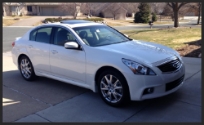
Hi, this is my 1st post so please bear with me. I need to transport my 2007 G35S sedan 1600 miles next week. I am looking at renting an auto transport trailer from Uhaul, but am hesitant because of the low ground clearance of my G. I've noticed the newer trailers they use now (orange w/ 55mph speed rating) have a taller lip at the front than the older trailers (silver w/ 45 mph speed rating) had. Anyone have any advice or experience with one?
Thanks
Thanks
Last edited by fndrofwendys; Nov 13, 2011 at 12:53 PM.


When i moved my car i got a full car trailer and it worked out just fine. They say it cant go faster then 55 bet i was at 60mph for the most part. The company i used was budget.
Thread Starter
|
Registered User
Joined: Nov 2011
Posts: 8
Likes: 0
From: Grand Forks, ND
ok. Thanks. Yah, I would prefer to use a different company than Uhaul, but they're the only ones I know of that will rent you a trailer w/o also renting a truck from them.

Hi, this is my 1st post so please bear with me. I need to transport my 2007 G35S sedan 1600 miles next week. I am looking at renting an auto transport trailer from Uhaul, but am hesitant because of the low ground clearance of my G. I've noticed the newer trailers they use now (orange w/ 55mph speed rating) have a taller lip at the front than the older trailers (silver w/ 45 mph speed rating) had. Anyone have any advice or experience with one?
Thanks
Thanks
IIRC, there was a distinction made between the silver vs. orange colored trailers which I recall had more to do with the width of the tracks (one was narrower and less suited to a fullsize car).
At the front of the trailer is the saddle where the front wheels sit. I did find that it was too "deep" and would cause the nose of the car to scrape once it was pulled all the way forward. To remedy this, I just raised up (shimmed) the entire bottom of the saddle area with a shorter (16" maybe) piece of 2x12 wood plank (can't recall if it was one or two thicknesses). This allowed the front end to clear everything while still providing a tall enough curb to stop the front wheel. I considered whether there would be any issues with the wood slipping around in the metal trough, but after cinching down the binders over the front wheels, it became quite obvious that it would be a non issue. In the end, even after 450 miles there was NO movement!
IDK if this pertains to your situation (depending on how far you're dropped) so disregard if it doesn't apply, but as far as concerns over the ground clearance, I loaded a vehicle that was dropped to within 3" off the ground. To accomplish that, I also needed to decrease the angle of their ramp (and essentially make it longer).
I imagined two ways to do this. One was to use natural terrain (ie. back the trailer up to an appropriate slope/incline/hill and load the car from the high side. The other (assuming level ground) was to do it mechanically.
For that, I just raised up the end of their ramp with some stacked 2x12 blocks (16" - 24") and then used some longer 2x12 pieces (4' - 6' long, I can't remember exactly) to extend the ramp from those same blocks further back onto the ground. I also shimmed the longer boards mid-span so they didn't flex too much.
I'm aware this might sound very sketchy, but I assure you it came off without a hitch and was a total non-event. In the interest of safety, I'll make one particular note: SET THE PARKING BRAKE ON THE TOWING VEHICLE so the trailer doesn't move during the loading! There is normally sufficient play in transmissions such that the vehicle can rock back and forth a few inches while in park. This is enough to allow the trailer to move a bit as you're loading; Obviously you don't want that if you're blocking and extending the ramp.
I just swung by the Home Depot nearest the U-haul place and picked out a couple longer 2x12's and had them cut them up for me right there, so I left the store with everything I needed.
Once you're up on the trailer, highway-ing is a total breeze. I know the trailers have speed limits posted on them (which may or may not have been 'accidentally' covered by some wayward pieces of easily removed duct tape
 ), but I believe them to be ridiculously low in an over-conservative attempt to prevent liability issues. Make sure your tires check out, both on the tow car and trailer, and you should be good to go. After stopping a few times to check the tires for heat and finding no issues, I ran right around 60-65 on the interstate more in the interest of fuel economy than safety concerns.
Good luck and welcome to the forum.
Trending Topics
This is true, but beware that the local outlets can be fussy about the exact specs of the towing vehicle. They often will complain about anything less than a heavy 3/4 ton with a class 4 hitch.

Registered User
Joined: May 2011
Posts: 255
Likes: 3
From: Edmond, OK
I towed mine with an orange car dolly and a Ranger.
I used 2x4s due to clearance, but wasn't too worried due to to a broken bumper.
You'd have to fudge what you are hauling to get Uhaul to give you the dolly. Its all on their site.
Is it a manual? Thought you couldn't use a dolly on RWD autos.
FWIW a friend towed a 993 on a full trailer and an older 2wd Taco.
I used 2x4s due to clearance, but wasn't too worried due to to a broken bumper.
You'd have to fudge what you are hauling to get Uhaul to give you the dolly. Its all on their site.
Is it a manual? Thought you couldn't use a dolly on RWD autos.
FWIW a friend towed a 993 on a full trailer and an older 2wd Taco.
Yep, I've had to do that before too, and sometimes it doesn't even matter how light the car you're towing is. I once borrowed a bigger truck just to go pickup the trailer, then made the switch to my "unqualified" (per U-haul) tow vehicle after I left the yard. Of course if you do this you're obviously setting yourself up for some increased liability should anything go wrong, so be sure what you're planning on using as a tow vehicle is sufficiently rated for the loading of trailer + car. BTW, those trailers are HEAVY. it's practically the weight of a small car all by itself.
Last edited by vqsmile; Nov 13, 2011 at 08:14 PM.
Registered User
Joined: May 2011
Posts: 255
Likes: 3
From: Edmond, OK
Yep, I've had to do that before too, and sometimes it doesn't even matter how light the car you're towing is. I once borrowed a bigger truck just to go pickup the trailer, then made the switch to my "unqualified" (per U-haul) tow vehicle after I left the yard. Of course if you do this you're obviously setting yourself up for some increased liability should anything go wrong, so be sure what you're planning on using as a tow vehicle is sufficiently rated for the loading of trailer + car. BTW, those trailers are HEAVY. it's practically the weight of a small car all by itself.
All of their trailers are way too heavy. The lack of brakes and a jack irritate me too.
Thread Starter
|
Registered User
Joined: Nov 2011
Posts: 8
Likes: 0
From: Grand Forks, ND
Assuming you are referring to their full trailer and not just the dolly, then Yes, I used one to tow a car from socal to norcal (about 450 miles).
IIRC, there was a distinction made between the silver vs. orange colored trailers which I recall had more to do with the width of the tracks (one was narrower and less suited to a fullsize car).
At the front of the trailer is the saddle where the front wheels sit. I did find that it was too "deep" and would cause the nose of the car to scrape once it was pulled all the way forward. To remedy this, I just raised up (shimmed) the entire bottom of the saddle area with a shorter (16" maybe) piece of 2x12 wood plank (can't recall if it was one or two thicknesses). This allowed the front end to clear everything while still providing a tall enough curb to stop the front wheel. I considered whether there would be any issues with the wood slipping around in the metal trough, but after cinching down the binders over the front wheels, it became quite obvious that it would be a non issue. In the end, even after 450 miles there was NO movement!
IDK if this pertains to your situation (depending on how far you're dropped) so disregard if it doesn't apply, but as far as concerns over the ground clearance, I loaded a vehicle that was dropped to within 3" off the ground. To accomplish that, I also needed to decrease the angle of their ramp (and essentially make it longer).
I imagined two ways to do this. One was to use natural terrain (ie. back the trailer up to an appropriate slope/incline/hill and load the car from the high side. The other (assuming level ground) was to do it mechanically.
For that, I just raised up the end of their ramp with some stacked 2x12 blocks (16" - 24") and then used some longer 2x12 pieces (4' - 6' long, I can't remember exactly) to extend the ramp from those same blocks further back onto the ground. I also shimmed the longer boards mid-span so they didn't flex too much.
I'm aware this might sound very sketchy, but I assure you it came off without a hitch and was a total non-event. In the interest of safety, I'll make one particular note: SET THE PARKING BRAKE ON THE TOWING VEHICLE so the trailer doesn't move during the loading! There is normally sufficient play in transmissions such that the vehicle can rock back and forth a few inches while in park. This is enough to allow the trailer to move a bit as you're loading; Obviously you don't want that if you're blocking and extending the ramp.
I just swung by the Home Depot nearest the U-haul place and picked out a couple longer 2x12's and had them cut them up for me right there, so I left the store with everything I needed.
Once you're up on the trailer, highway-ing is a total breeze. I know the trailers have speed limits posted on them (which may or may not have been 'accidentally' covered by some wayward pieces of easily removed duct tape ), but I believe them to be ridiculously low in an over-conservative attempt to prevent liability issues. Make sure your tires check out, both on the tow car and trailer, and you should be good to go. After stopping a few times to check the tires for heat and finding no issues, I ran right around 60-65 on the interstate more in the interest of fuel economy than safety concerns.
Good luck and welcome to the forum.
IIRC, there was a distinction made between the silver vs. orange colored trailers which I recall had more to do with the width of the tracks (one was narrower and less suited to a fullsize car).
At the front of the trailer is the saddle where the front wheels sit. I did find that it was too "deep" and would cause the nose of the car to scrape once it was pulled all the way forward. To remedy this, I just raised up (shimmed) the entire bottom of the saddle area with a shorter (16" maybe) piece of 2x12 wood plank (can't recall if it was one or two thicknesses). This allowed the front end to clear everything while still providing a tall enough curb to stop the front wheel. I considered whether there would be any issues with the wood slipping around in the metal trough, but after cinching down the binders over the front wheels, it became quite obvious that it would be a non issue. In the end, even after 450 miles there was NO movement!
IDK if this pertains to your situation (depending on how far you're dropped) so disregard if it doesn't apply, but as far as concerns over the ground clearance, I loaded a vehicle that was dropped to within 3" off the ground. To accomplish that, I also needed to decrease the angle of their ramp (and essentially make it longer).
I imagined two ways to do this. One was to use natural terrain (ie. back the trailer up to an appropriate slope/incline/hill and load the car from the high side. The other (assuming level ground) was to do it mechanically.
For that, I just raised up the end of their ramp with some stacked 2x12 blocks (16" - 24") and then used some longer 2x12 pieces (4' - 6' long, I can't remember exactly) to extend the ramp from those same blocks further back onto the ground. I also shimmed the longer boards mid-span so they didn't flex too much.
I'm aware this might sound very sketchy, but I assure you it came off without a hitch and was a total non-event. In the interest of safety, I'll make one particular note: SET THE PARKING BRAKE ON THE TOWING VEHICLE so the trailer doesn't move during the loading! There is normally sufficient play in transmissions such that the vehicle can rock back and forth a few inches while in park. This is enough to allow the trailer to move a bit as you're loading; Obviously you don't want that if you're blocking and extending the ramp.
I just swung by the Home Depot nearest the U-haul place and picked out a couple longer 2x12's and had them cut them up for me right there, so I left the store with everything I needed.
Once you're up on the trailer, highway-ing is a total breeze. I know the trailers have speed limits posted on them (which may or may not have been 'accidentally' covered by some wayward pieces of easily removed duct tape
), but I believe them to be ridiculously low in an over-conservative attempt to prevent liability issues. Make sure your tires check out, both on the tow car and trailer, and you should be good to go. After stopping a few times to check the tires for heat and finding no issues, I ran right around 60-65 on the interstate more in the interest of fuel economy than safety concerns.Good luck and welcome to the forum.
Thread Starter
|
Registered User
Joined: Nov 2011
Posts: 8
Likes: 0
From: Grand Forks, ND
Thanks guys. I plan to tow it with my Tahoe Z71 which luckily the numbers work out for Uhaul without having to fudge them lol. I was surprised at the weight of their trailer (2100lb), pretty heavy like Greenlawnracing said. From what I can tell I should be fine as far as the numbers go though. Thanks again for the info.


We towed my dads 09 Corvette on an orange uhaul trailer behind our 08 Silverado... 55mph speed limit, psh, we were doing like 80 towing that thing hahaha
If that car could get on the trailer, a G should.
If that car could get on the trailer, a G should.