


G35 Sedan With Exotic Window Tint






Joined: Oct 2007
Posts: 4,334
Likes: 121
From: ɷCONNECTICUTɷ
See the differences:
How to Make Your Car Look Like a VIP's Car
VIP styling is a style of vehicle modification. The term VIP car (also called bippu, but is pronounced "vip" as in sounds like whip) originated in Japan to describe the modification of certain luxury car models, such as the Toyota Aristo and Nissan President, to give them a more distinctive look. While only modified versions of these specific high-end cars can technically be called VIP cars, you can apply VIP style to just about any car.
[edit] Steps
1. Get a car. VIP styling generally begins with a large, four-door, rear-wheel-drive luxury sedan. In the U.S., Lexus and Infiniti sedans are the most popular platforms for VIP modification, but European imports such as Mercedes are growing more common, and even American cars are sometimes done up in VIP Style.
* Unless you're a purist, the model of car isn't as important as how it looks. People are increasingly applying VIP styling to Kias, Scions, and even minivans, but you want a flawless car, not a beater.
* VIP cars are traditionally black, white, grey or silver. Try to find an appropriate car in one of these colors or have it professionally painted one of these colors. If you're not too concerned about the constraints of tradition, you can choose any color you like.
2. Lower the car as far as it will go. There are a couple of ways to lower the vehicle. Probably the most popular now is the use of air suspension, since many of the high-end models that are modified into VIP cars already come equipped with air suspension. Since factory air suspension won't allow you to lower the car enough, many enthusiasts install a special air control system. Coilovers can also attain the desired lowness. Try to minimize the distance between the wheel and the fender.
3. Install very wide, low-offset custom wheels. The wheels are perhaps the most important characteristic of VIP styling. Oversize (18-20") wheels are essential. Another almost-universal trait is that the wheels should be flush with the car's fenders, which requires a very low wheel offset (rear-wheel drive vehicles typically have a lower offset than front-wheel drive vehicles, but most VIP-styled cars have even lower offsets). Negative camber angle (the angle between the vertical axis of the wheel and the vertical axis of the vehicle, as viewed from the front or rear) is also very common. Wheels with large lips are common, but not essential. It should go without saying that you should only use chrome, custom rims.
4. Mount smaller than recommended tires on the wheels so the tires pull away from the wheel's mounting edge. Tires are usually stretched dangerously thin on the wheels, as tire stretching (hipari) allows a flush, or close to flush, wheel to fender fit. The idea is not to tuck the wheel into the fender but rather have the lip of the wheel as close to the fender's edge as possible. Only the tire is tucked in, while the wheel is emphasized.
5. "Widen" the car. VIP-style cars should be not only low, but also wide. A body kit can enhance both of these features. Add a body kit that emphasizes the car's lines while adding presence. Go all out with a full aero kit, or, at the very least add a lip kit.
6. Customize the interior. VIP style exudes luxury inside and out. Curtains on the windows are very popular, as are custom leather seats, floor mats (fur, anyone?), an accessorized dash, custom lighting and wood grain trim throughout. Tint the windows in either green or black to keep prying eyes out.
7. Install a high-end audio system and electronic accessories. A VIP-style car without a quality system just won't do. While a trunk full of subs is a good start, focus also on fitting your car with video and audio accessories to give it all the comforts of home. From electronic gauges to a DVD player to a navigation system, screens and monitors give the car the look of the luxury spaceship.
8. Add the personal touch. While there are certain conventions that should be followed when modifying in VIP style, there's plenty of room for your individual tastes. From custom taillights to interior accessories, there are plenty of options to set your car apart from the rest.
9. Don't forget the tassles.
VIP styling is a style of vehicle modification. The term VIP car (also called bippu, but is pronounced "vip" as in sounds like whip) originated in Japan to describe the modification of certain luxury car models, such as the Toyota Aristo and Nissan President, to give them a more distinctive look. While only modified versions of these specific high-end cars can technically be called VIP cars, you can apply VIP style to just about any car.
[edit] Steps
1. Get a car. VIP styling generally begins with a large, four-door, rear-wheel-drive luxury sedan. In the U.S., Lexus and Infiniti sedans are the most popular platforms for VIP modification, but European imports such as Mercedes are growing more common, and even American cars are sometimes done up in VIP Style.
* Unless you're a purist, the model of car isn't as important as how it looks. People are increasingly applying VIP styling to Kias, Scions, and even minivans, but you want a flawless car, not a beater.
* VIP cars are traditionally black, white, grey or silver. Try to find an appropriate car in one of these colors or have it professionally painted one of these colors. If you're not too concerned about the constraints of tradition, you can choose any color you like.
2. Lower the car as far as it will go. There are a couple of ways to lower the vehicle. Probably the most popular now is the use of air suspension, since many of the high-end models that are modified into VIP cars already come equipped with air suspension. Since factory air suspension won't allow you to lower the car enough, many enthusiasts install a special air control system. Coilovers can also attain the desired lowness. Try to minimize the distance between the wheel and the fender.
3. Install very wide, low-offset custom wheels. The wheels are perhaps the most important characteristic of VIP styling. Oversize (18-20") wheels are essential. Another almost-universal trait is that the wheels should be flush with the car's fenders, which requires a very low wheel offset (rear-wheel drive vehicles typically have a lower offset than front-wheel drive vehicles, but most VIP-styled cars have even lower offsets). Negative camber angle (the angle between the vertical axis of the wheel and the vertical axis of the vehicle, as viewed from the front or rear) is also very common. Wheels with large lips are common, but not essential. It should go without saying that you should only use chrome, custom rims.
4. Mount smaller than recommended tires on the wheels so the tires pull away from the wheel's mounting edge. Tires are usually stretched dangerously thin on the wheels, as tire stretching (hipari) allows a flush, or close to flush, wheel to fender fit. The idea is not to tuck the wheel into the fender but rather have the lip of the wheel as close to the fender's edge as possible. Only the tire is tucked in, while the wheel is emphasized.
5. "Widen" the car. VIP-style cars should be not only low, but also wide. A body kit can enhance both of these features. Add a body kit that emphasizes the car's lines while adding presence. Go all out with a full aero kit, or, at the very least add a lip kit.
6. Customize the interior. VIP style exudes luxury inside and out. Curtains on the windows are very popular, as are custom leather seats, floor mats (fur, anyone?), an accessorized dash, custom lighting and wood grain trim throughout. Tint the windows in either green or black to keep prying eyes out.
7. Install a high-end audio system and electronic accessories. A VIP-style car without a quality system just won't do. While a trunk full of subs is a good start, focus also on fitting your car with video and audio accessories to give it all the comforts of home. From electronic gauges to a DVD player to a navigation system, screens and monitors give the car the look of the luxury spaceship.
8. Add the personal touch. While there are certain conventions that should be followed when modifying in VIP style, there's plenty of room for your individual tastes. From custom taillights to interior accessories, there are plenty of options to set your car apart from the rest.
9. Don't forget the tassles.
Rice burner is a pejorative used initially to describe Asian-made — particularly Japanese-made — motorcycles and automobiles. Many variations have also been used, such as rice rocket for Japanese sport bikes.
More contemporary use of the term rice burner, along with the prefix rice, has taken on an alternate pejorative meaning for an automobile that has been modified to give impression of high performance, but does not necessarily have any high-performance capabilities. This practice is in direct contrast to the "stealth" or "sleeper" style of automotive modification, where a vehicle may have major performance modifications, but the appearance remains similar to that of a stock model. In this manner, the appellation can apply to any vehicle regardless of country of origin. The most commonly modified cars are sport compacts, but the term can apply to any class of vehicle, including trucks.
In the UK, cars so modified are said to have been "chavved up", due to the popularity of such non-functional styling modifications in chav culture. Another term is "maxed/maxxed", or "laxed/laxxed", the former being derived from the name of the magazine Max Power which mainly features such non-functionally-modified cars, the latter from the derogatory nickname "Lax Power" applied to this magazine.
In some circles, or even entire regions of North America, the terms rice car, ricer, or rice burner are used exclusively to describe Asian-made vehicles, whether they have been modified or not. However, as more types of cars began being used as a platform for modification, including German and American-made cars, use of the term rice is no longer restricted to Asian-made vehicles.
More contemporary use of the term rice burner, along with the prefix rice, has taken on an alternate pejorative meaning for an automobile that has been modified to give impression of high performance, but does not necessarily have any high-performance capabilities. This practice is in direct contrast to the "stealth" or "sleeper" style of automotive modification, where a vehicle may have major performance modifications, but the appearance remains similar to that of a stock model. In this manner, the appellation can apply to any vehicle regardless of country of origin. The most commonly modified cars are sport compacts, but the term can apply to any class of vehicle, including trucks.
In the UK, cars so modified are said to have been "chavved up", due to the popularity of such non-functional styling modifications in chav culture. Another term is "maxed/maxxed", or "laxed/laxxed", the former being derived from the name of the magazine Max Power which mainly features such non-functionally-modified cars, the latter from the derogatory nickname "Lax Power" applied to this magazine.
In some circles, or even entire regions of North America, the terms rice car, ricer, or rice burner are used exclusively to describe Asian-made vehicles, whether they have been modified or not. However, as more types of cars began being used as a platform for modification, including German and American-made cars, use of the term rice is no longer restricted to Asian-made vehicles.
Joined: Oct 2007
Posts: 4,334
Likes: 121
From: ɷCONNECTICUTɷ
Wow. Calling someone an idiot because they don't share your taste?

Registered User
Joined: May 2008
Posts: 244
Likes: 0
From: Jackson, NJ
Thanks, Aaron. I was about to ask. Now I know.
BUT... why the new term? Maybe I'm missing something, but the definition seems to fit the low riders that have been around for decades. I guess the major difference is that low riders tend to be domestic '60s and '70s vehicles. (then bled over into compact truck territory in the late '80s. ugh.)
Sorry. Don't mean to threadjack or anything.
BUT... why the new term? Maybe I'm missing something, but the definition seems to fit the low riders that have been around for decades. I guess the major difference is that low riders tend to be domestic '60s and '70s vehicles. (then bled over into compact truck territory in the late '80s. ugh.)
Sorry. Don't mean to threadjack or anything.

Originally Posted by AARONHL
OK Just wondering if there was any G35s with tint like this...if you think this is RICE you are an idiot:
...and I think you are an idiot for disagreeing with me.

Here's more of your "VIP" awsomeness...
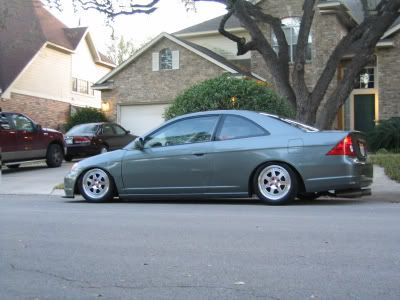

And the coup de grâce...


Last edited by 350Zed; Jul 25, 2008 at 04:22 PM.
Joined: Oct 2007
Posts: 4,334
Likes: 121
From: ɷCONNECTICUTɷ
Thanks, Aaron. I was about to ask. Now I know.
Here's more of your "VIP" awsomeness...


Registered User
Joined: Feb 2008
Posts: 3,867
Likes: 28
From: WEST COAST
Can't be talking about VIP without mentioning Junction Produce!!!
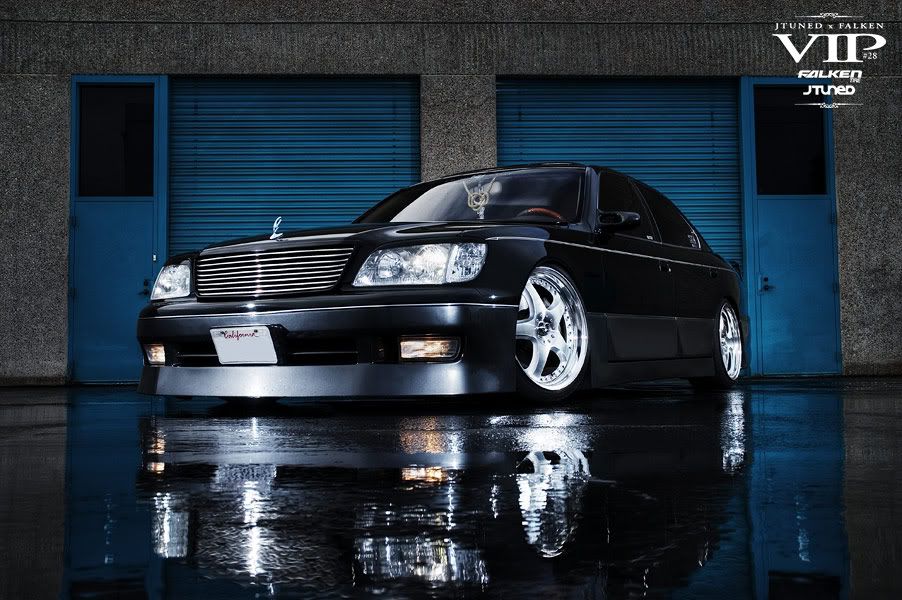


But to all the guys saying that our G35's isn't a VIP car, yes you guys are correct there is no way our sports sedans can be VIP, thats why theres "VIP Style cars" not a "VIP car" theres a difference. (what i heard from the VIP tuners)
but check this guy out. vip style G. i think it looks great.
www.cardomain.com/ride/2567900
But to all the guys saying that our G35's isn't a VIP car, yes you guys are correct there is no way our sports sedans can be VIP, thats why theres "VIP Style cars" not a "VIP car" theres a difference. (what i heard from the VIP tuners)
but check this guy out. vip style G. i think it looks great.
www.cardomain.com/ride/2567900
 ...Nissan president grille with E-class lights on a Q45= FAIL.

Originally Posted by 350Zed
I think it's rice...
...and I think you are an idiot for disagreeing with me.
Here's more of your "VIP" awsomeness...
And the coup de grâce...
...and I think you are an idiot for disagreeing with me.
Here's more of your "VIP" awsomeness...
And the coup de grâce...