


Tire pressure question...


Thread Starter
|
Registered User
Joined: Jul 2007
Posts: 8
Likes: 0
Tire pressure question...
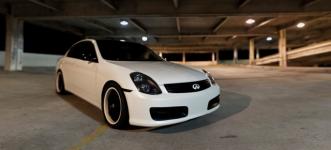
Hi there... I just put new Kumho 235 45 r18's on my 2005 6mt sedan... the pressure indicated on the sidewall of the tire is 50lbs... the installer told me that he had just put in 40 lbs since the sidewalls are so stiff and that I could up it to 45lbs if I noticed lateral movement in the car... I e-mailed the tire seller and he suggested that I inflate the tires to the recommended pressure on my door jam... the recommended pressure on my car is only 33lbs !!! My gut tells me to pump the tires up to what is says on the actual tire, however, I have an experienced installer and tire retailer telling me to do different things...
Any insight on this ??
Thanks for the help !!
Regards,
Rod.
Any insight on this ??
Thanks for the help !!
Regards,
Rod.

Registered User
Joined: Jul 2009
Posts: 100
Likes: 2
From: Daly City, CA
I'd go with the installer's recommendations. I had an old civic and the for the wheels/tires I had, the trusty tire shop told me to put in 40 and the car handled great. After some service at the dealer, I argued with them after they took air out of my tires so I made them put the air back in.

Registered User
Joined: Aug 2009
Posts: 31
Likes: 1
From: Northshore MA
My understanding is the sidewall is always the max rating of the tire itself, and the door jamb is what the car mfg recommends based on wheel base, handling, design considerations, etc.... I keep my tires at 33psi, my '06 AWD says 30 on the door jamb which is a bit low for me.

NEVER go by what is on the tire. Go by what is on the door jamb. That pressure takes into account the vehicle's weight. The pressure on the tire is MAX pressure. Basically it's saying "NEVER exceed this pressure". Recommended pressure is a factor of tire contact patch surface area combined with taking the vehicles weight into consideration.
Your door jamb says 30psi, and that is a good starting point. A good test is to chalk the tire with a line across (paint works better) and to drive and observe the wear pattern. If the center wears faster, decrease the pressure. If the center doesn't wear, increase the pressure. If the sidewalls roll over too much, increase slightly.
But 45 psi sounds extreme for a 235. That's very close to stock contact patch area. I run 32 psi in my '06x with 215's. I have 295's on my Mustang and only need to run 28 psi to maintain proper tire patch area as the contact patch area increased and the car is lighter
Your door jamb says 30psi, and that is a good starting point. A good test is to chalk the tire with a line across (paint works better) and to drive and observe the wear pattern. If the center wears faster, decrease the pressure. If the center doesn't wear, increase the pressure. If the sidewalls roll over too much, increase slightly.
But 45 psi sounds extreme for a 235. That's very close to stock contact patch area. I run 32 psi in my '06x with 215's. I have 295's on my Mustang and only need to run 28 psi to maintain proper tire patch area as the contact patch area increased and the car is lighter
Last edited by Mustang5L5; May 5, 2010 at 12:40 PM.

Registered User
Joined: Dec 2009
Posts: 159
Likes: 0
From: Elkhart, IN
My understanding is the sidewall is always the max rating of the tire itself, and the door jamb is what the car mfg recommends based on wheel base, handling, design considerations, etc.... I keep my tires at 33psi, my '06 AWD says 30 on the door jamb which is a bit low for me.



Go with what the installer recommends over the doorjamb, that number is for the stock tires / tire size, which you are no longer running. 45 is a little high though... You don't want to go to the max that's on the sidewall.
38-40 is probably a good place to start, and then adjust up/down from there to get the feel you're after... also, have your tires rotated in 3000mi and ask if the wear indicates over/under inflation... that will tell you if you're running too much or not enough.
38-40 is probably a good place to start, and then adjust up/down from there to get the feel you're after... also, have your tires rotated in 3000mi and ask if the wear indicates over/under inflation... that will tell you if you're running too much or not enough.
Trending Topics

Go with what the installer recommends over the doorjamb, that number is for the stock tires / tire size, which you are no longer running. 45 is a little high though... You don't want to go to the max that's on the sidewall.
38-40 is probably a good place to start, and then adjust up/down from there to get the feel you're after... also, have your tires rotated in 3000mi and ask if the wear indicates over/under inflation... that will tell you if you're running too much or not enough.
38-40 is probably a good place to start, and then adjust up/down from there to get the feel you're after... also, have your tires rotated in 3000mi and ask if the wear indicates over/under inflation... that will tell you if you're running too much or not enough.
^Ok, I missed that it was his stock size... Sorry, I'm used to the 215/55/17s
That advice was also based on previous experiance... I had a set of tires on one of my previous cars that was meant to run a higher pressure than what was listed on the doorjamb... however, some brainless tech that changed my oil took it upon himself to check the tires against that number and drop the pressure in the tires... I didn't notice until I had an excessive amount of wear on the OUTSIDE of the tread... so yeah, the manufacturer of the car only knows best when you're going back with tires that are the same spec as the car came with... which the OP apparently is (again, sorry I didn't notice)
I've found it's usually easier to tell if the tires are over-pressure than under-pressure though.
Why don't you just email Kuhmo they know more about the tire they built than the place who sold it, the guy that installed it, Nissan, or anyone on this board.
That advice was also based on previous experiance... I had a set of tires on one of my previous cars that was meant to run a higher pressure than what was listed on the doorjamb... however, some brainless tech that changed my oil took it upon himself to check the tires against that number and drop the pressure in the tires... I didn't notice until I had an excessive amount of wear on the OUTSIDE of the tread... so yeah, the manufacturer of the car only knows best when you're going back with tires that are the same spec as the car came with... which the OP apparently is (again, sorry I didn't notice)
I've found it's usually easier to tell if the tires are over-pressure than under-pressure though.
Why don't you just email Kuhmo
they know more about the tire they built than the place who sold it, the guy that installed it, Nissan, or anyone on this board.

Hi there... I just put new Kumho 235 45 r18's on my 2005 6mt sedan... the pressure indicated on the sidewall of the tire is 50lbs... the installer told me that he had just put in 40 lbs since the sidewalls are so stiff and that I could up it to 45lbs if I noticed lateral movement in the car... I e-mailed the tire seller and he suggested that I inflate the tires to the recommended pressure on my door jam... the recommended pressure on my car is only 33lbs !!! My gut tells me to pump the tires up to what is says on the actual tire, however, I have an experienced installer and tire retailer telling me to do different things...
Any insight on this ??
Thanks for the help !!
Regards,
Rod.
Any insight on this ??
Thanks for the help !!
Regards,
Rod.

That advice was also based on previous experiance... I had a set of tires on one of my previous cars that was meant to run a higher pressure than what was listed on the doorjamb... however, some brainless tech that changed my oil took it upon himself to check the tires against that number and drop the pressure in the tires... I didn't notice until I had an excessive amount of wear on the OUTSIDE of the tread... so yeah, the manufacturer of the car only knows best when you're going back with tires that are the same spec as the car came with... which the OP apparently is (again, sorry I didn't notice)
I've found it's usually easier to tell if the tires are over-pressure than under-pressure though.
I've found it's usually easier to tell if the tires are over-pressure than under-pressure though.
That's why what works for 1 person isn't going to always work for someone else. You really need to figure out ideal pressure on your own.
Kumho's tend to be a little soft in the sidewall. I have a set on 1 set of tires on my Mustang and notice they tend to wear more on the edges due to rolling over. I would not buy again. I have dunlops on another set of wheels for the car and they have a stiff sidewall, so my pressure is actually slightly under what was OEM.
A lot of installers recomment low-pro tires be run at higher pressure to save the rim. Customer installs expensive wheels with 30 or 35 series sidewalls. The installer jacks the pressure up slightly as it create a stiffer sidewall forcing the suspension to take the bump, and not giving the sidewall a chance to flex and impact the rim and dent it.
But a stiff sidewall is not necessarily a good thing. You want a little bit of rollover as it allows the tire to "settle" especially in an S turn during the transition point. A stiff sidewall can induce oversteer just the same as an overly stiff suspension can induce oversteer as well. Too stiff of a sway bar can do this as well. I know when I autoX, we use tire pressure as "on-site" bandaids to fix handling issues. If the nose pushes through a turn, lower the front psi a bit and increase the rear. If the rear is coming around too easily, decrease rear pressure and increase front pressure. Making the tire stiffer by raising pressure actually makes that end of the car more unstable. Lowering pressure makes it a little softer and actually makes that end bite slightly better. (assuming the car is set up fairly nuetral)
CLiff's Notes: Every car/tire combo is gonna be different, stiffer is not always better (unless in bed)
Last edited by Mustang5L5; May 6, 2010 at 10:13 AM.

i run mines at 34-35.
i was at 33 right before the winter and they dropped to 25-26 when i was in fresno during the frosty 33 degree nights (car parked outside). Added air to 35 all around and the TPMS light went off.
Running on Kumho ectas spt's.
I do second the fact that you should never fill tires to their maximum rate pressure. Follow the vehicle manufacture's recommendation on the door jam and add a few psi if needed.
i was at 33 right before the winter and they dropped to 25-26 when i was in fresno during the frosty 33 degree nights (car parked outside). Added air to 35 all around and the TPMS light went off.
Running on Kumho ectas spt's.
I do second the fact that you should never fill tires to their maximum rate pressure. Follow the vehicle manufacture's recommendation on the door jam and add a few psi if needed.
 I joke because they're calling for a "wintry mix" on Saturday up here.

Thread
Thread Starter
Forum
Replies
Last Post
BlueBelleG35x
General Tech Questions
0
Jul 23, 2015 02:10 PM
