


carbon fiber driveshaft???


don't forget to sign up so i can get them a solid count
$1095 cf units
1. SDGenius '03 5AT
2. Row2K '03 6MT coupe
3.
4.
5.
$425 aluminum units
1. SDGenius '03 5AT
2.
3.
4.
5.
*prices do NOT include tax/shipping where applicable
$1095 cf units
1. SDGenius '03 5AT
2. Row2K '03 6MT coupe
3.
4.
5.
$425 aluminum units
1. SDGenius '03 5AT
2.
3.
4.
5.
*prices do NOT include tax/shipping where applicable

Cf unit for me after I read row2k explanation and also read up on aptc info on carbon driveshaft........plz read the whole page.....very informative and explains all the pros over aluminum.
http://www.acpt.com/driveshaft/driveshafts.html
http://www.acpt.com/driveshaft/driveshafts.html
That little extra weight loss that aluminum gives u over carbon doesn't necessarily give u more power to the ground cuz its lost in the torsional vibration that carbon absorbs.
Sorry had to quote them jus in case some don't want to click the link
"All driveshafts twist to some degree when torque is applied. The resistance to this twist is measured as torsional spring rate. Standard ACPT driveshafts have a torsional spring rate a little less than aluminum and about half that of steel. The advantage of a lower spring rate is less driveline shock and a reduction of stress on other drivetrain components, as well as increased traction. Every part of your drivetrain may benefit from the use of a carbon fiber shaft.
The continual twist when torque is applied eventually causes all metal shafts to take a set in the twisted position. Consequently the shaft ends become permanently out of phase by several degrees and vibration begins to break components. Carbon fiber, on the other hand, has a near perfect "elastic memory". ACPT's carbon fiber driveshafts can't fail by becoming permanently twisted.
As RPM goes up, all driveshafts begin to whip. At a certain "critical speed", unique to each type of driveshaft, this bending of the shaft creates lateral runout and vibration. The intensity (magnitude) and frequency of these bad vibes are determined by a combination of stiffness, density, size, and geometry. This vibration is a primary cause of drivetrain breakage from the transmission to the rear end. The "critical speed" of ACPT's carbon fiber shafts is much higher than steel or aluminum shafts of the same size. Exceptional harmonic damping coupled with high lateral stiffness and low density allow carbon fiber driveshafts to virtually eliminate vibration problems from shaft whip." -acpt-
Sorry had to quote them jus in case some don't want to click the link
"All driveshafts twist to some degree when torque is applied. The resistance to this twist is measured as torsional spring rate. Standard ACPT driveshafts have a torsional spring rate a little less than aluminum and about half that of steel. The advantage of a lower spring rate is less driveline shock and a reduction of stress on other drivetrain components, as well as increased traction. Every part of your drivetrain may benefit from the use of a carbon fiber shaft.
The continual twist when torque is applied eventually causes all metal shafts to take a set in the twisted position. Consequently the shaft ends become permanently out of phase by several degrees and vibration begins to break components. Carbon fiber, on the other hand, has a near perfect "elastic memory". ACPT's carbon fiber driveshafts can't fail by becoming permanently twisted.
As RPM goes up, all driveshafts begin to whip. At a certain "critical speed", unique to each type of driveshaft, this bending of the shaft creates lateral runout and vibration. The intensity (magnitude) and frequency of these bad vibes are determined by a combination of stiffness, density, size, and geometry. This vibration is a primary cause of drivetrain breakage from the transmission to the rear end. The "critical speed" of ACPT's carbon fiber shafts is much higher than steel or aluminum shafts of the same size. Exceptional harmonic damping coupled with high lateral stiffness and low density allow carbon fiber driveshafts to virtually eliminate vibration problems from shaft whip." -acpt-

Thanks for the link PR good info there.
The thing is if your not a dedicated track car those advantages mean nothing to us who DD our cars because most never take it to that limit.
I like the weight saving and the appeal of having a CF driveshaft, but I have never heard of a broken driveshaft on a DD G35.
The alum might appeal to most due to the cost.
The thing is if your not a dedicated track car those advantages mean nothing to us who DD our cars because most never take it to that limit.
I like the weight saving and the appeal of having a CF driveshaft, but I have never heard of a broken driveshaft on a DD G35.
The alum might appeal to most due to the cost.


One of my big reasons for the CF is I do notice some vibration in my car at speed and there are signs that point to it being drivetrain related ie. my shift know vibrating at highway speeds and some vibration that I can feel through the seats even though I've had my wheels roadforce balanced more than once. I'd rather spend the extra bit on the CF shaft to not only eliminate the carrier bearing (possible cause of vibration being I'm over 100k miles) but also to hopefully alleviate the small potential drivetrain vibration I have.
don't forget to sign up so i can get them a solid count
$1095 cf units
1. SDGenius '03 5AT
2. Row2K '03 6MT coupe
3. PR-g35driver '03 6MT coupe
4.
5.
$425 aluminum units
1. SDGenius '03 5AT
2.
3.
4.
5.
*prices do NOT include tax/shipping where applicable
$1095 cf units
1. SDGenius '03 5AT
2. Row2K '03 6MT coupe
3. PR-g35driver '03 6MT coupe
4.
5.
$425 aluminum units
1. SDGenius '03 5AT
2.
3.
4.
5.
*prices do NOT include tax/shipping where applicable
Does meatbag have pics of his installed?
Not that I know of, but Philthy does on his G35 coupe:
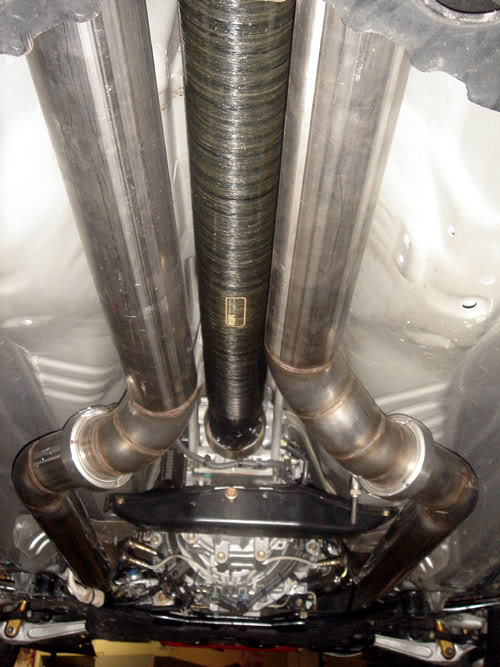
more pics:
http://my350z.com/forum/2221934-post12.html
more pics:
http://my350z.com/forum/2221934-post12.html