


How to correctly drive an MT.



Registered User
iTrader: (18)
Joined: Sep 2007
Posts: 10,359
Likes: 1,941
From: Auckland, New Zealand
Traded in my AT rsx for MT 350z. First two days of owning the car I killed it several times. Ive been driving it for 3 weeks but after reading this I think I am reving too high when moving from a stop. Especially on inclines. Ugh my poor clutch.....
EDIT: I will admit I haven't read all 35 pages of this thread so this may be redundant. I find it difficult to reverse short distances without riding the clutch/over reving. I find that I almost NEVER fully let off the clutch in reverse. So it goes clutch to the floor, put it in reverse, clutch half engaged, give it some gas to start rolling the car then depress the clutch to the floor, repeat once or twice when parking. Any advice?
EDIT: I will admit I haven't read all 35 pages of this thread so this may be redundant. I find it difficult to reverse short distances without riding the clutch/over reving. I find that I almost NEVER fully let off the clutch in reverse. So it goes clutch to the floor, put it in reverse, clutch half engaged, give it some gas to start rolling the car then depress the clutch to the floor, repeat once or twice when parking. Any advice?

Registered User
Joined: Sep 2012
Posts: 25
Likes: 0
I rarely let out the clutch in reverse. I just give it a "bump" to get the car moving and then push it back in.
If you are reving more than 1000-1500 to do a normal start, yes it too fast. It just takes practice in knowing how much gas to clutch engagement to use.
Some of the best practice you get, go to a large parking lot that is not used on Sunday. Practice taking off in first WITHOUT TOUCHING THE GAS AT ALL! This will teach you clutch engagement. The VQ motor has plenty of Torque to move the car without using the gas. Once you get that down, the rest will be easy.
If you are reving more than 1000-1500 to do a normal start, yes it too fast. It just takes practice in knowing how much gas to clutch engagement to use.
Some of the best practice you get, go to a large parking lot that is not used on Sunday. Practice taking off in first WITHOUT TOUCHING THE GAS AT ALL! This will teach you clutch engagement. The VQ motor has plenty of Torque to move the car without using the gas. Once you get that down, the rest will be easy.


It will on mine for sure. The only time I dont give a little gas is when it's just started and still revving high for the first 30 seconds (yeah I know, "let it warm up!!!11!"), or else you COULD do it without gas when it's warm, but let off very veryyy slowly.
Registered User
Joined: Sep 2012
Posts: 25
Likes: 0
Well Im in Cincinnati now.... lotsa lotsa hills. But the winters arent so bad so thats good.

Registered User
Joined: Oct 2012
Posts: 1
Likes: 1
From: new york
Originally Posted by chilibowl
On many forums I browse thru, (as im a enthusiast of all types of cars), there is such a misconception on how to drive a MT. All these talks of double-clutching, and how to correctly downshift, and riding the clutch a bit too much on take-off. Although the G's arent the easiest cars to drive in the planet, its not rocket science. We have high-engagement point clutches, but as with anything, you simply adapt to it. If you cant adapt, then you simply dont belong driving an MT.
For first, "double-clutching" is NOT NECESSARY AT ALL. These are synchronized transmissions, and whoever is doing this is honestly wasting their time. Double-clutching, to those who dont know, is the act of using the clutch twice in order to make a gear shift. So lets say your in 2nd gear, wanting to shift into third. You would clutch in, put the shifter in neutral, clutch out, match up RPM's, then re- clutch in, and then put it in 3rd, then re- clutch out. This is simply f*cking stupid. Whoever is doing this, is seriously wasting their time because this doesnt "save" your transmission from abuse nor will it make it last longer. This was done on cars WAYYYYY back in the day who did not have synchronized transmissions.
Take a peak at this video...Listen for the downshifts as he comes back to the camera...
You Tube
You Tube
Do you hear his downshifts? You can CLEARLY HEAR, this incorrect downshift, and I addressed it with one of my boys that he is simply downshifting incorrectly. What you hear in this video, is this person simply putting the shifter into a lower gear and letting out the clutch very slowly, allowing the clutch to fry in order to catch up with the drivetrain. Although the slower you let your clutch the more you fry it, you will not feel such a sudden jerk/pull on the car, but it is still very bad for your clutch. Whoever this is, in this video, I feel sorry for your clutch at about 40-60K miles. When you do this, you are simply forcing your clutch and flywheel to match up with the RPM's in the previous gear.
The correct way to downshift, is to rev-match. Lets say youre in 5th gear, at about 3K rpms on the highway, and you need some more passing power. 4th would be nice...so in order to downshift CORRECTLY, the process goes as this...
1) 5th gear, 3K rpm...you want 4th...
2) You clutch-in, and AS YOUR MOVING THE SHIFTER INTO 4TH, you blip the throttle, matching the revs as to what they would be in 4th gear, approximately 4.5K rpm. Let the clutch-out. This must be done in one step. Not 2, not 3. One step. If done correctly, you should feel NOTHING, no tugging/pulling of the car, but simply a louder motor because of the higher revs. Granted, once you start practicing, you may miss it, by over-revving, or under-revving. If you over-rev, the car will lurch forward. If you under-rev, you will feel a tug. If you under-rev, thats when you can use the clutch slightly to smooth out the transition, but you should NEVER "use" the clutch 100% to do your downshift for you. As I said before, you are simply frying your clutch.
Heel-toe'ing is a different subject and it is honestly not needed in daily driving. Track use, yes, very efficient technique to have the best braking and best acceleration around corners, but for daily driving, it really isnt necessary at all.
Over-revving on a takeoff is also bad on your clutch. From a 1st gear takeoff from a light, you should NOT be higher than 2K rpm's while the clutch is halfway. If you are revving past 2K rpms on a take off , you are burning up your clutch. Too much over-revving and you decrease the life of your clutch. Once in a while, its fine, no disaster, just dont make it a habit. The sweetspot for a take-off is 1.5K rpms.
While sitting at a light, never have the clutch-in waiting until the light turns green. This is stupid and the only thing youre doing is tiring your left leg and eating up your throw-out bearing. If your sitting at a light, you simply leave it in neutral, and unless ur on a hill, you shouldnt have to have your feet on any pedal. Once you see that the adjacent light is turning yellow (your turn next), you clutch-in, 1st gear, and you take off. Simple.
Also, this is a manual transmission people, do not be afraid to play with your revs. If your in 5th, and want to downshift into 3rd, and you barely tap the throttle and YOU KNOW you didnt tap it enough for a smooth 3rd gear downshift, simply leave the clutch pushed in and play with your gas pedal, until you blip it to the perfect rpm, then let the clutch out smoothly. It is not a crime to play with your revs, do it all you want. Good lucky and happy shifting....
Edited with Summarized document.................
For first, "double-clutching" is NOT NECESSARY AT ALL. These are synchronized transmissions, and whoever is doing this is honestly wasting their time. Double-clutching, to those who dont know, is the act of using the clutch twice in order to make a gear shift. So lets say your in 2nd gear, wanting to shift into third. You would clutch in, put the shifter in neutral, clutch out, match up RPM's, then re- clutch in, and then put it in 3rd, then re- clutch out. This is simply f*cking stupid. Whoever is doing this, is seriously wasting their time because this doesnt "save" your transmission from abuse nor will it make it last longer. This was done on cars WAYYYYY back in the day who did not have synchronized transmissions.
Take a peak at this video...Listen for the downshifts as he comes back to the camera...
You Tube
You Tube
Do you hear his downshifts? You can CLEARLY HEAR, this incorrect downshift, and I addressed it with one of my boys that he is simply downshifting incorrectly. What you hear in this video, is this person simply putting the shifter into a lower gear and letting out the clutch very slowly, allowing the clutch to fry in order to catch up with the drivetrain. Although the slower you let your clutch the more you fry it, you will not feel such a sudden jerk/pull on the car, but it is still very bad for your clutch. Whoever this is, in this video, I feel sorry for your clutch at about 40-60K miles. When you do this, you are simply forcing your clutch and flywheel to match up with the RPM's in the previous gear.
The correct way to downshift, is to rev-match. Lets say youre in 5th gear, at about 3K rpms on the highway, and you need some more passing power. 4th would be nice...so in order to downshift CORRECTLY, the process goes as this...
1) 5th gear, 3K rpm...you want 4th...
2) You clutch-in, and AS YOUR MOVING THE SHIFTER INTO 4TH, you blip the throttle, matching the revs as to what they would be in 4th gear, approximately 4.5K rpm. Let the clutch-out. This must be done in one step. Not 2, not 3. One step. If done correctly, you should feel NOTHING, no tugging/pulling of the car, but simply a louder motor because of the higher revs. Granted, once you start practicing, you may miss it, by over-revving, or under-revving. If you over-rev, the car will lurch forward. If you under-rev, you will feel a tug. If you under-rev, thats when you can use the clutch slightly to smooth out the transition, but you should NEVER "use" the clutch 100% to do your downshift for you. As I said before, you are simply frying your clutch.
Heel-toe'ing is a different subject and it is honestly not needed in daily driving. Track use, yes, very efficient technique to have the best braking and best acceleration around corners, but for daily driving, it really isnt necessary at all.
Over-revving on a takeoff is also bad on your clutch. From a 1st gear takeoff from a light, you should NOT be higher than 2K rpm's while the clutch is halfway. If you are revving past 2K rpms on a take off , you are burning up your clutch. Too much over-revving and you decrease the life of your clutch. Once in a while, its fine, no disaster, just dont make it a habit. The sweetspot for a take-off is 1.5K rpms.
While sitting at a light, never have the clutch-in waiting until the light turns green. This is stupid and the only thing youre doing is tiring your left leg and eating up your throw-out bearing. If your sitting at a light, you simply leave it in neutral, and unless ur on a hill, you shouldnt have to have your feet on any pedal. Once you see that the adjacent light is turning yellow (your turn next), you clutch-in, 1st gear, and you take off. Simple.
Also, this is a manual transmission people, do not be afraid to play with your revs. If your in 5th, and want to downshift into 3rd, and you barely tap the throttle and YOU KNOW you didnt tap it enough for a smooth 3rd gear downshift, simply leave the clutch pushed in and play with your gas pedal, until you blip it to the perfect rpm, then let the clutch out smoothly. It is not a crime to play with your revs, do it all you want. Good lucky and happy shifting....
Edited with Summarized document.................
Posted from G35driver.com App for Android


Registered User
Joined: Sep 2012
Posts: 25
Likes: 0
get a new clutch pedal bracket from RJM Performance. You'll never go back to the whack *** contraption that is the OEM pedal. super adjustable. easy install. WORLD OF DIFFERENCE.
the assist spring on the OEM gives you such a disconnect on what is REALLY happening vs what you feel in the pedal.
the assist spring on the OEM gives you such a disconnect on what is REALLY happening vs what you feel in the pedal.
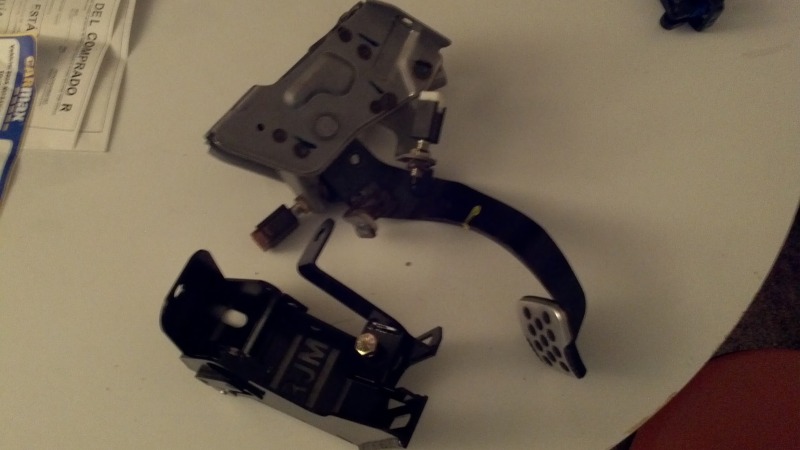
Got my RJM clutch assembly for my 350z. Ive had it for 4 days, Ive adjusted it a couple of times but now its perfect. I shift alot smoother now. Also amazing customer service. You can see that in this thread.
http://my350z.com/forum/engine-and-d...l-bracket.html
+1 on the RJM clutch bracket. Put mine in last week and I could never go back. First because I'd need new E clips to rebuild the OEM bracket, but mostly because it's so much better to drive my G now.


On the fist page of the thread it says "You should always let up the clutch slowly and smoothly. Not so slow that ur halfway for more than 2 seconds, but nice and fluidly."
Does that mean that this should about 0.75-1 seconds between the time that the clutch pedal is fully depressed to the point that the clutch pedal is fully released? If not I'm doing it very wrong.
Also does that advice just apply to driving with as little stress as possible on your clutch?
For example if I wanted to squeeze the most speed out of my car would it be best to shift in as little time as possible? I realize this is hard on the clutch I'm strictly asking from a performance perspective.
Thanks
Does that mean that this should about 0.75-1 seconds between the time that the clutch pedal is fully depressed to the point that the clutch pedal is fully released? If not I'm doing it very wrong.
Also does that advice just apply to driving with as little stress as possible on your clutch?
For example if I wanted to squeeze the most speed out of my car would it be best to shift in as little time as possible? I realize this is hard on the clutch I'm strictly asking from a performance perspective.
Thanks

On the fist page of the thread it says "You should always let up the clutch slowly and smoothly. Not so slow that ur halfway for more than 2 seconds, but nice and fluidly."
Does that mean that this should about 0.75-1 seconds between the time that the clutch pedal is fully depressed to the point that the clutch pedal is fully released? If not I'm doing it very wrong.
Also does that advice just apply to driving with as little stress as possible on your clutch?
For example if I wanted to squeeze the most speed out of my car would it be best to shift in as little time as possible? I realize this is hard on the clutch I'm strictly asking from a performance perspective.
Thanks
Does that mean that this should about 0.75-1 seconds between the time that the clutch pedal is fully depressed to the point that the clutch pedal is fully released? If not I'm doing it very wrong.
Also does that advice just apply to driving with as little stress as possible on your clutch?
For example if I wanted to squeeze the most speed out of my car would it be best to shift in as little time as possible? I realize this is hard on the clutch I'm strictly asking from a performance perspective.
Thanks
Essentially there are two rotors (pressure plate and flywheel) and one double sided brake pad (clutch disk). The way I like to think about it is that one rotor is attached to the trans and the other rotor is attached to the motor. When the motor is running, the rotor on the motor is spinning with the crank. When the transmission is in gear, the rotor on the transmission is spinning relative to the speed of the wheels, given the current gear selection. If you release the clutch too quickly, it sandwiches the disk before it has a chance to slip. You want it to slip because it will slowly cause the two rotors to match each other's speeds. If you don't slip them, then they slam into each other.
You wouldn't go around slamming on your brakes all the time, right? You let them slip to slow the car down, but you don't want them slipping too much because you will overheat them.
To optimize your shifts, you'll want to eliminate any slipping of the clutch by perfectly matching the engine speeds to the transmission/wheels speed - then you won't have to slip to match them, since they're already matched.
On the fist page of the thread it says "You should always let up the clutch slowly and smoothly. Not so slow that ur halfway for more than 2 seconds, but nice and fluidly."
Does that mean that this should about 0.75-1 seconds between the time that the clutch pedal is fully depressed to the point that the clutch pedal is fully released? If not I'm doing it very wrong.
Also does that advice just apply to driving with as little stress as possible on your clutch?
For example if I wanted to squeeze the most speed out of my car would it be best to shift in as little time as possible? I realize this is hard on the clutch I'm strictly asking from a performance perspective.
Thanks
Does that mean that this should about 0.75-1 seconds between the time that the clutch pedal is fully depressed to the point that the clutch pedal is fully released? If not I'm doing it very wrong.
Also does that advice just apply to driving with as little stress as possible on your clutch?
For example if I wanted to squeeze the most speed out of my car would it be best to shift in as little time as possible? I realize this is hard on the clutch I'm strictly asking from a performance perspective.
Thanks
You will NEVER see a road course driver "speed shifting" his car (shifting fast without letting up on the gas), he will always try to "rev match" for the next gear going up or down through the gears. This minimizes stress on the clutch and drive train. I have never found the need to speed shift. Car and Driver said that they no longer do it during 1/4 mile testing it only made a 0.1 second difference and a missed shift is real costly.
This might've been covered earlier in this thread, but the clutch system is a lot like the brake system, it just works in reverse.
Essentially there are two rotors (pressure plate and flywheel) and one double sided brake pad (clutch disk). The way I like to think about it is that one rotor is attached to the trans and the other rotor is attached to the motor. When the motor is running, the rotor on the motor is spinning with the crank. When the transmission is in gear, the rotor on the transmission is spinning relative to the speed of the wheels, given the current gear selection. If you release the clutch too quickly, it sandwiches the disk before it has a chance to slip. You want it to slip because it will slowly cause the two rotors to match each other's speeds. If you don't slip them, then they slam into each other.
You wouldn't go around slamming on your brakes all the time, right? You let them slip to slow the car down, but you don't want them slipping too much because you will overheat them.
To optimize your shifts, you'll want to eliminate any slipping of the clutch by perfectly matching the engine speeds to the transmission/wheels speed - then you won't have to slip to match them, since they're already matched.
Essentially there are two rotors (pressure plate and flywheel) and one double sided brake pad (clutch disk). The way I like to think about it is that one rotor is attached to the trans and the other rotor is attached to the motor. When the motor is running, the rotor on the motor is spinning with the crank. When the transmission is in gear, the rotor on the transmission is spinning relative to the speed of the wheels, given the current gear selection. If you release the clutch too quickly, it sandwiches the disk before it has a chance to slip. You want it to slip because it will slowly cause the two rotors to match each other's speeds. If you don't slip them, then they slam into each other.
You wouldn't go around slamming on your brakes all the time, right? You let them slip to slow the car down, but you don't want them slipping too much because you will overheat them.
To optimize your shifts, you'll want to eliminate any slipping of the clutch by perfectly matching the engine speeds to the transmission/wheels speed - then you won't have to slip to match them, since they're already matched.